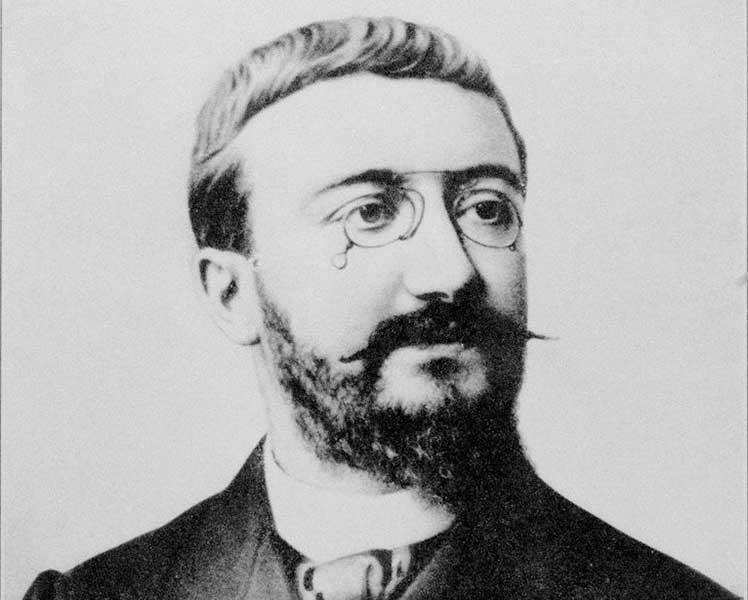
Alfred Binet
Pioneer of Intelligence Assessment and Early Child Development
Alfred Binet (1857-1911) was a French psychologist who is primarily known as the father of modern intelligence testing. While his most famous contribution, the Binet-Simon Scale, was designed to identify children needing special educational support, his work laid foundational groundwork for understanding cognitive development across the lifespan, particularly in establishing the concept of “mental age.” He also engaged in broader experimental psychology, with interests in perception, memory, and even the psychology of chess players.
Key Contributions to Development:
-
The Binet-Simon Intelligence Scale (1905):
-
Purpose: The French Ministry of Public Instruction commissioned Binet and his colleague Théodore Simon to develop a method to identify schoolchildren who would struggle in a regular classroom and benefit from special education. This was a humanitarian goal, aiming to provide appropriate support, not simply to label children.
-
Focus on Higher Mental Processes: Unlike earlier attempts at intelligence measurement (e.g., by Francis Galton, who focused on sensory and motor abilities), Binet believed intelligence involved “higher” mental functions such as memory, attention, comprehension, judgment, and reasoning. His test items reflected this, including tasks like naming objects, reproducing drawings, completing sentences, and understanding logical relationships.
-
Concept of Mental Age: A revolutionary aspect of the Binet-Simon Scale was the introduction of “mental age.” A child’s mental age was determined by the level of tasks they could successfully complete. For example, a 6-year-old child who could perform tasks typically mastered by an average 8-year-old would have a mental age of 8. This provided a developmental metric for intellectual ability, directly linking intelligence to the typical cognitive progression observed in children.
-
Nature of Intelligence: Binet explicitly stated that his test did not measure a fixed, inborn, or single quantity of intelligence. He believed intelligence was multifaceted, modifiable, and influenced by education and experience. This perspective challenged the prevailing view that intelligence was entirely genetic and immutable. He also cautioned against using a single score to define a child’s entire intellectual capacity.
-
Observations of Child Development:
-
Before developing his famous test, Binet conducted extensive and detailed observations and experiments with his own two daughters. These observations were critical in shaping his understanding of cognitive development and individual differences. He published several papers based on these studies, noting age-related differences in performance and the qualitative differences in how children and adults think (e.g., how children define objects by their purpose vs. adults by formal categories). This “naturalistic observation” approach foreshadowed some of the methods used by Jean Piaget.
-
He also noted the importance of factors like attention span and suggestibility in intellectual development, contributing to early understandings of cognitive processes in children.
-
Early Advocate for Experimental Pedagogy:
-
Binet was a proponent of applying scientific methods to education. He established a laboratory-school at Grange-aux-Belles to conduct experimental research with children and to train teachers in educating children with intellectual disabilities. This was a significant step in the formation of educational psychology.
-
He also developed the concept of “mental orthopedics”, which involved exercises designed to improve attention, willpower, and other non-intellectual factors that could impact a child’s school performance. This demonstrated his belief in the malleability of intellectual functioning and the potential for educational interventions.
Relation to Adult Development:
While Binet’s primary focus was on children and identifying those with intellectual disabilities, his work has a foundational, though indirect, relationship to adult development:
-
Establishing “Mental Age”: The concept of mental age provided a scale of cognitive development that, in its later adaptations (like the Stanford-Binet, which introduced the IQ formula relating mental age to chronological age), implied a progression of intellectual abilities that could be tracked, at least theoretically, into early adulthood.
-
Intelligence as a Developmental Construct: Binet’s emphasis that intelligence was not fixed but could evolve and be influenced by the environment opened the door for later developmental psychologists to explore how cognitive abilities change and adapt throughout the entire lifespan, not just in childhood. His work provided the initial psychometric tools and a conceptual framework that could be extended to study intellectual abilities in adults.
-
Individual Differences: His systematic study of individual differences in higher mental processes laid the groundwork for the broader field of differential psychology, which examines how people vary across a range of psychological traits, including those that continue to develop or change in adulthood.
In essence, Alfred Binet’s legacy is rooted in his pioneering work in intelligence testing, which profoundly shaped educational practices and our understanding of cognitive development in children. While not directly a theorist of adult development, his conceptualization of intelligence as a developing, rather than fixed, entity and his creation of the “mental age” metric provided crucial tools and a conceptual springboard for later researchers to investigate intellectual changes and abilities across the full human lifespan.