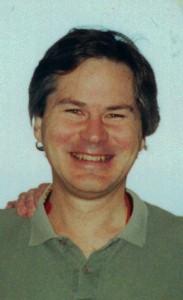
Charles “Skip” Alexander
Vedic Psychology and Adult Growth
Charles N. “Skip” Alexander (1950 - 1998) was an American developmental psychologist most recognized for his groundbreaking work in extending models of human development to include “higher stages of consciousness.” His research, often in collaboration with Maharishi Mahesh Yogi and the Transcendental Meditation (TM) movement, challenged traditional psychological views by proposing that significant psychological and cognitive growth continues well beyond the generally accepted endpoints of adolescence or early adulthood.
Alexander’s primary contribution lies in his attempt to integrate the concept of higher states of consciousness, derived from Vedic psychology (particularly Maharishi Vedic Science), into the scientific study of human development. He believed that these states represent a natural and accessible progression of human potential, leading to more integrated, adaptable, and compassionate individuals.
Key Contributions and Concepts:
-
Beyond Conventional Developmental Endpoints: Mainstream developmental psychology often implicitly or explicitly views cognitive and ego development as plateauing in early adulthood (e.g., Piaget’s formal operational thought, Loevinger’s integrated ego stage). Alexander argued that this perspective was incomplete. Drawing from ancient wisdom traditions, he proposed that human potential extends to distinct, empirically verifiable “higher states of consciousness” beyond the waking, dreaming, and deep sleep states. These typically include:
-
Transcendental Consciousness: A state of pure, silent awareness, experienced during deep meditation.
-
Cosmic Consciousness: The experience of the Self as distinct from the changing world, yet intimately connected to it.
-
God Consciousness: The experience of the transcendental Self permeated with positive, blissful feelings in all activity.
-
Unity Consciousness: A state where one directly experiences the unity of all creation, perceiving the Self in everything.
-
The Role of Transcendental Meditation (TM): Alexander’s research strongly posited that the Transcendental Meditation technique provided a systematic and reliable method for individuals to access and stabilize these higher states of consciousness. He conducted numerous empirical studies, often in collaboration with colleagues at Maharishi International University (now Maharishi International University), investigating the physiological (e.g., EEG patterns), psychological, and social effects of TM practice across diverse populations.
-
“Unfreezing” and Accelerating Development: A key finding from his research was the observation that TM practice could “unfreeze” arrested development in certain populations (e.g., maximum-security prisoners) and accelerate developmental growth (e.g., in college students). He argued that by regularly experiencing the “silent basis of the mind” through TM, individuals could integrate higher levels of coherence and organization into their waking state, leading to advances in cognitive complexity, moral reasoning, emotional stability, and overall well-being.
-
Integral Developmental Models: Alexander was a proponent of more holistic, “integral” approaches to development that encompass not just cognitive and socio-emotional aspects but also spiritual or transpersonal dimensions. His work, particularly his co-edited book Higher Stages of Human Development: Perspectives on Adult Growth (1990), brought together various theorists who shared an interest in exploring human potential beyond conventional adult maturity.
-
Psychological and Societal Implications: Alexander believed that the development of higher states of consciousness in individuals had profound implications for society. He hypothesized that a critical mass of individuals practicing TM could positively influence the collective consciousness, leading to decreased crime, reduced conflict, and improved quality of life in communities. This concept was part of his broader vision for a “physiology of consciousness.”
In essence, Charles N. “Skip” Alexander challenged the boundaries of what was considered possible in human development. By introducing the concept of higher states of consciousness and empirically investigating the role of meditative practices in fostering them, he opened new avenues for developmental psychology to explore the full spectrum of human potential, pushing the field beyond purely secular or Western-centric models. His work remains a significant contribution to transpersonal psychology and the study of adult spiritual development.