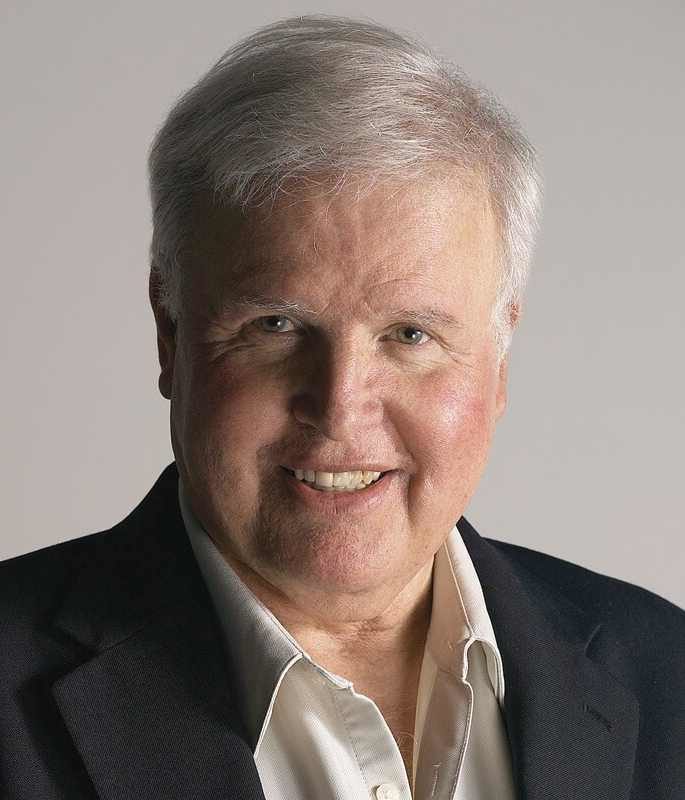
Don Edward Beck
Spiral Dynamics Integral and Societal Applications
Don Edward Beck (1937–2022) was an American management consultant and geopolitical advisor, and a primary developer of Spiral Dynamics Integral (SDi). As a direct student and collaborator of Clare Graves, Beck, along with Chris Cowan, formalized and applied Graves’s complex ECLET theory to a wide range of real-world contexts, particularly in large-scale social, political, and organizational change. Beck emphasized the practical application of the Gravesian model to understand global conflicts, cultural dynamics, and leadership strategies, focusing on the potential for “second-tier thinking” to navigate increasing complexity.
Key Concepts and Contributions:
Spiral Dynamics Integral (SDi): Beck and Cowan’s Spiral Dynamics (1996) popularized Graves’s theory by assigning easily recognizable colors to each of the levels of existence (vMEMES). This color-coding system (e.g., Beige, Purple, Red, Blue, Orange, Green, Yellow, Turquoise) made the complex model more accessible and applicable to diverse fields. SDi provides a language and framework for identifying the underlying value systems that drive individuals, groups, and nations.
Second-Tier Thinking (Yellow and Turquoise): Beck particularly emphasized the emergence of “second-tier” consciousness (Yellow and Turquoise). He argued that these levels represent a qualitative leap in thinking:
-
They are the first levels capable of seeing and valuing all previous levels of existence.
-
They move from “subsistence” thinking (preoccupied with survival or solving problems within a single level) to “being” thinking (preoccupied with understanding the overall flow and how to facilitate the health of the entire system).
-
Second-tier consciousness is crucial for navigating extreme complexity, integrating diverse perspectives, and solving “meta-problems” that arise from multiple interacting vMEMES.
Large-Scale Applications: Beck extensively applied Spiral Dynamics to complex global issues, including:
-
South Africa’s Transition: He famously worked with political leaders during the post-apartheid transition, using Spiral Dynamics to help understand and bridge the vast differences in value systems within the country.
-
Organizational Transformation: Applying the framework to help leaders understand their own and their employees’ underlying motivations and design more effective change strategies.
-
Global Conflicts: Analyzing the clash of different vMEMES in geopolitical hotspots to inform diplomacy and conflict resolution.
Meme-Stalking: Beck referred to the practice of observing and mapping the prevalence and influence of different vMEMES in individuals, groups, and cultures as “meme-stalking,” advocating for a nuanced understanding that avoids simplistic labeling.
Significance for Cultural/Historical Evolution of Consciousness:
Beck’s work holds immense significance for this category for several reasons:
-
Popularization and Application: He was instrumental in making Graves’s complex theory accessible and applicable to real-world challenges, particularly those related to large-scale cultural and historical shifts in consciousness.
-
Framework for Societal Change: SDi provides a powerful lens for understanding and strategizing societal evolution, offering insights into why certain changes are difficult and how to facilitate transitions towards more complex, integrated levels of collective consciousness.
-
Focus on “Second-Tier” Leadership: Beck’s emphasis on “second-tier thinking” highlights a crucial developmental threshold for leaders and societies to effectively navigate global complexity, cultural diversity, and intractable problems, pointing towards higher forms of individual and collective awareness.
-
Interdisciplinary Bridge: He actively sought to connect Graves’s psychological model with insights from sociology, political science, and anthropology, strengthening its relevance for understanding cultural and historical evolution.
In summary, Don Edward Beck, through Spiral Dynamics Integral (SDi), significantly advanced the application of Clare Graves’s theory to understanding the cultural and historical evolution of consciousness on a grand scale. By popularizing the vMEME color-code system and emphasizing the emergence of “second-tier thinking,” he provided a practical framework for navigating complex societal transformations and global challenges by mapping the underlying evolution of human values and worldviews.