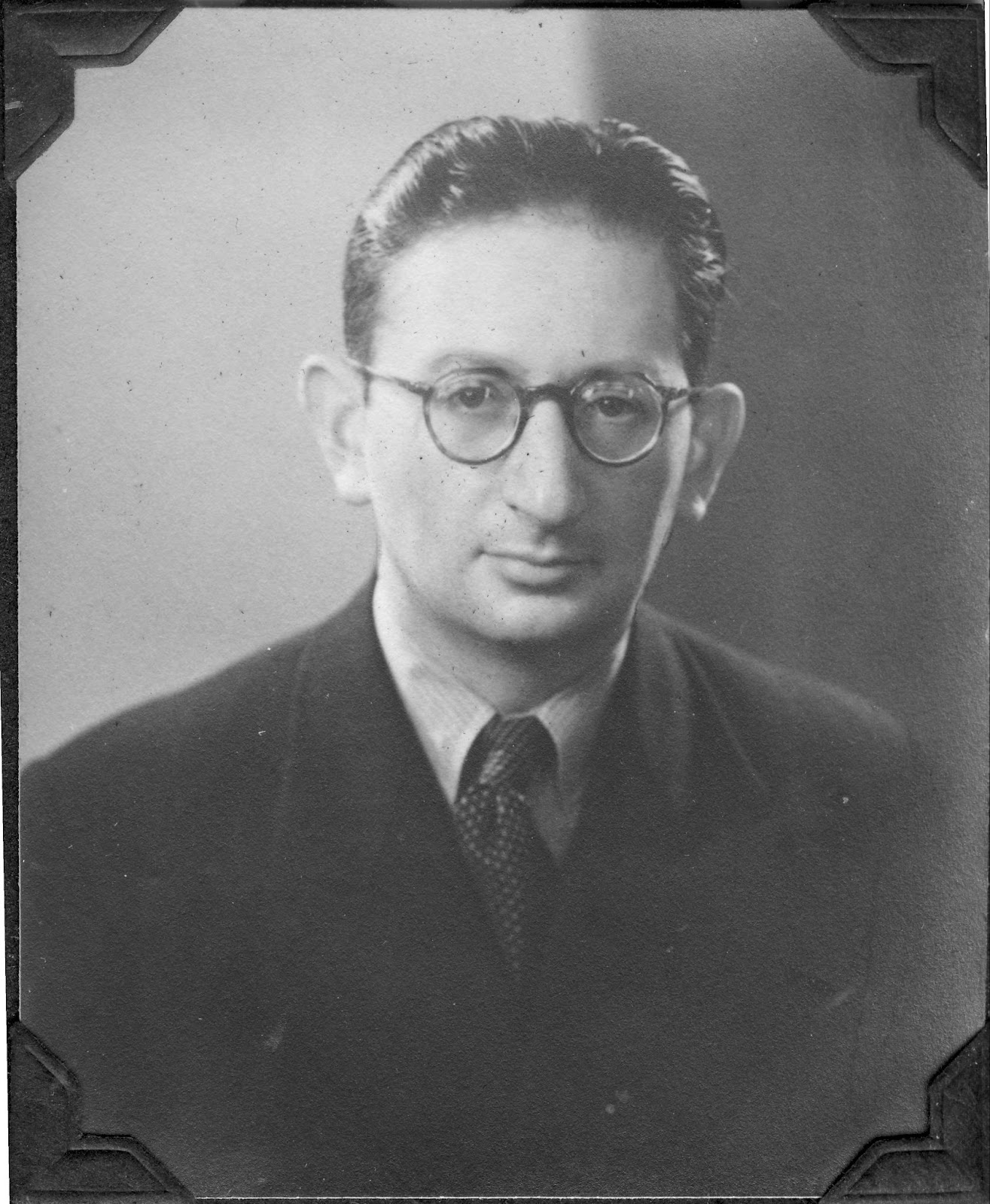
Erich Neumann
The Origins and History of Consciousness
Erich Neumann (1905–1960) was a German-Israeli analytical psychologist and one of Carl Jung’s most creative students. His seminal work, The Origins and History of Consciousness, offers a unique exploration of the evolution of human consciousness by drawing extensively on world mythology and symbolism. Neumann posited that the development of consciousness, both in the individual and in humanity as a whole, follows archetypal stages, tracing the emergence of the ego and the separation from a primal, undifferentiated unconsciousness. While deeply rooted in Jungian psychology, his work provides a rich, symbolic, and developmental narrative of the historical unfolding of human awareness.
Key Concepts and Contributions:
Archetypal Stages of Consciousness Development: Neumann argued that the development of consciousness in the individual recapitulates the same archetypal stages as the historical development of human consciousness as a whole. He used universal myths and symbols to illustrate these stages:
-
The Uroboros: Represents the primal, undifferentiated state of consciousness, where the ego is still merged with the collective unconscious. It is a state of unity, yet also a lack of self-awareness.
-
The Great Mother: Symbolizes the emergence from the Uroboros, but still within a state of unconscious fusion with the feminine principle, characterized by containment and dependence.
-
The Separation of the World Parents: Represents the differentiation of opposites and the beginning of the ego’s separation from the unconscious, often depicted as a heroic act of “killing” or separating from the primal unity.
-
The Hero’s Journey: This is a central archetypal narrative representing the ego’s struggle for independence, self-awareness, and the confrontation with unconscious forces. It involves trials, victories, and the integration of experience to solidify ego-consciousness.
-
The Transformation and Deification of the Hero: Represents the further development of consciousness beyond mere ego-strength, leading to greater psychological wholeness and the integration of the personal and collective unconscious.
Ego-Consciousness as an Evolutionary Achievement: For Neumann, the development of a clearly differentiated ego-consciousness from the primordial unconscious is the central thrust of humanity’s (and the individual’s) psychological evolution. This involves a continuous battle between the emerging ego and the powerful forces of the unconscious.
Symbolic Mediation: Neumann emphasized that symbols, myths, and rituals are crucial mediators in this developmental process. They provide the language and framework through which unconscious contents can be differentiated and integrated into conscious awareness.
Significance for Cultural/Historical Evolution of Consciousness:
Neumann’s work holds immense significance for understanding the cultural/historical evolution of consciousness for several reasons:
-
Mythological Framework for Evolution: He provides a unique mythological and symbolic framework for tracing the historical progression of human consciousness, offering a depth psychological interpretation of cultural shifts from primal states to more differentiated forms of awareness.
-
Connecting Individual to Collective Psyche: Neumann compellingly argues that the individual’s path of psychological development mirrors the collective psychological history of humanity. This provides a powerful lens for understanding how individual adults recapitulate (in a compressed form) the broad evolutionary steps of consciousness.
-
Archetypes as Developmental Drivers: He illustrates how universal archetypes are not static concepts but dynamic forces that drive developmental transformations, both in the individual and in cultural consciousness across history.
-
Understanding the Emergence of Ego and Identity: His work offers deep insights into the profound historical and psychological processes involved in the emergence of ego-consciousness and a more robust sense of self, which are fundamental to modern adult identity.
In summary, Erich Neumann’s The Origins and History of Consciousness provides a profound archetypal and depth psychological framework for understanding the historical evolution of human consciousness. By tracing the emergence of the ego through universal myths and symbols, his work illuminates the developmental stages through which both humanity and the individual mature into increasingly differentiated and integrated forms of awareness.