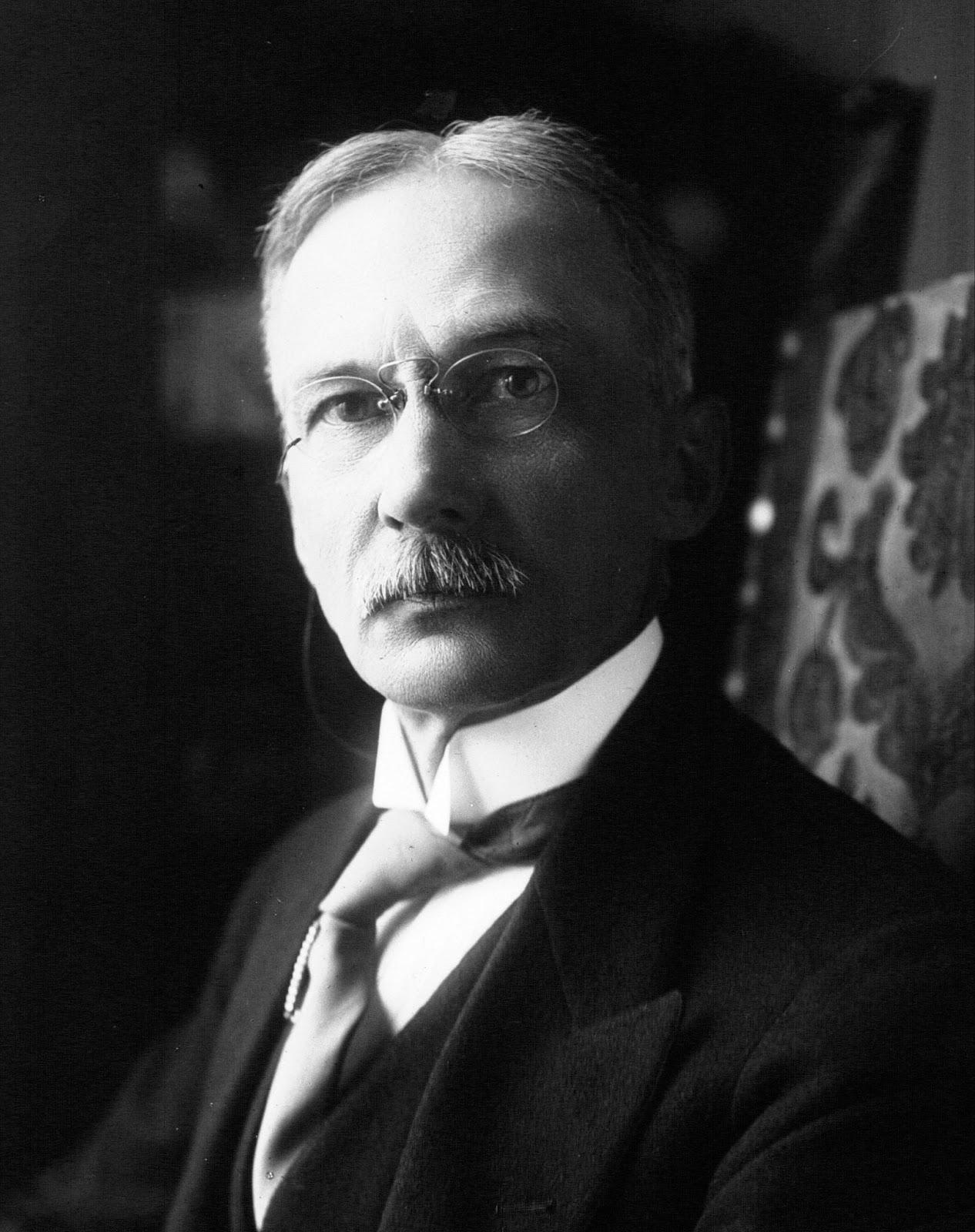
James Mark Baldwin
Pioneer of Developmental Psychology
James Mark Baldwin (1861-1934) was an exceptionally influential American psychologist and philosopher, a true pioneer in the nascent field of psychology in the late 19th and early 20th centuries. While his name might not be as universally recognized today as some of his contemporaries or later figures he influenced, his ideas were remarkably prescient and had a profound impact on subsequent developmental theories, particularly those of Jean Piaget and Lev Vygotsky. He is considered one of the earliest advocates for the systematic, empirical study of child development.
Key Contributions to Developmental Psychology:
-
Genetic Epistemology and Stage Theory: Baldwin was a progenitor of genetic epistemology, a field concerned with the origin and development of knowledge. He proposed a stage theory of cognitive development long before Piaget, based on his meticulous observations and experimental studies of infants and children, including his own daughters. He argued that children’s mental development progresses through a series of “logical stages” or “steps,” each building on the last through processes of adaptation. This step-wise progression, driven by interaction with the environment, laid crucial groundwork for Piaget’s later, more widely known, stage theory. His work on infant reaching and its role in mental development was particularly insightful.
-
Circular Reactions and Imitation: Baldwin’s concept of circular reactions described how infants repeatedly engage in actions that produce pleasurable or interesting results, leading to the refinement of those actions and new learning. He distinguished between primary, secondary, and tertiary circular reactions, foreshadowing Piaget’s later detailed descriptions. He also heavily emphasized the role of imitation as a fundamental mechanism of early learning and social development. For Baldwin, imitation was not merely mimicry but an active, adaptive process through which the child constructs knowledge about the self and others. He argued that through imitation, children learn to “get the feel” of others’ actions and, in doing so, begin to build their own capacities and understand social dynamics.
-
The Dialectic of Personal Growth: Self and Other: One of Baldwin’s most profound and enduring contributions was his detailed account of the co-construction of the “self” and the “other” within a social context. He proposed that the child initially perceives others as “projective” – as a source of unpredictable actions. Through active engagement, particularly imitation, the child begins to differentiate their own actions and experiences from those of others. This leads to the “ejective self” – the understanding that others also have internal experiences (minds) similar to one’s own. Baldwin argued that the “ego” (sense of self) and the “alter” (sense of other) are born together and develop dialectically, in a continuous give-and-take. “My sense of myself grows by imitation of you, and my sense of yourself grows in terms of my sense of myself.” This deeply relational and social view of self-development profoundly influenced later social psychology and developmental theories, especially the socio-cultural perspective advocated by Vygotsky and George Herbert Mead.
-
The “Baldwin Effect” (Organic Selection): While not purely a psychological concept, the “Baldwin Effect” (also known as “organic selection”) is a theoretical mechanism in evolutionary biology that has significant implications for developmental psychology. Baldwin proposed that learned behaviors or phenotypic adaptations acquired by individuals during their lifetime can, over generations, influence the direction of genetic evolution. That is, if a learned behavior is adaptive and allows individuals to survive better in a changing environment, those individuals predisposed to learning that behavior (or even performing it instinctively) will be selected for, eventually leading to the genetic assimilation of the trait or an increased capacity for learning. This provided a crucial link between individual learning and phylogenetic change, influencing modern thinking in evolutionary psychology and epigenetics.
-
Pioneer in Scientific Psychology: Beyond his specific theories, Baldwin was a key figure in establishing psychology as a rigorous, experimental science in the United States. He founded psychology laboratories at the University of Toronto and Princeton, helped establish foundational journals like the Psychological Review and Psychological Bulletin, and served as president of the American Psychological Association (APA).
In summary, James Mark Baldwin was a giant in early psychology, whose contributions, particularly in his stage theory of cognitive development, his emphasis on imitation and social interaction in the formation of self and other, and the “Baldwin Effect,” laid critical foundations for much of what we understand about human development today. His work demonstrates a remarkable foresight, anticipating many ideas later elaborated by more widely celebrated developmentalists.