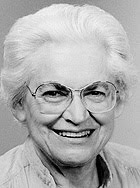
Jane Loevinger
The Theory of Ego Development
Jane Loevinger (1918-2008) was an American developmental psychologist who developed a highly influential theory of ego development. Her work, deeply rooted in psychodynamic traditions (drawing from Freud, Erikson, and especially Harry Stack Sullivan), provided a comprehensive, stage-based model that describes how an individual’s “ego” (their self-concept, worldview, and way of making meaning) matures and evolves throughout the lifespan. She viewed the ego not as a “thing” but as a process or a fundamental frame of reference that organizes and gives meaning to experience.
Loevinger’s theory stands out for its empirical rigor, as she developed a widely used and well-researched measurement tool, the Washington University Sentence Completion Test (WUSCT), to assess individuals’ ego development levels.
Key Concepts and Contributions:
-
The Ego as a Master Trait: Loevinger conceived of the ego as a unifying and organizing process of personality. It’s the “master trait” or “frame of reference” that integrates various aspects of personality, including impulse control, character development, interpersonal relations, and cognitive preoccupations. It’s the lens through which we interpret and construct our world.
-
Stages of Ego Development: Loevinger proposed a sequence of distinct stages (typically nine, though some are rarely observed or are considered transitional), each representing a progressively more complex and mature way of understanding oneself and the world. Progression through these stages is not guaranteed; it’s a process of interaction between internal maturational forces and life experiences. While some stages are modal for childhood, most are found in adulthood.
-
Pre-Social (Infancy): No true ego; chaotic, undifferentiated experience.
-
Impulsive (Early Childhood): Driven by immediate bodily impulses and needs; egocentric view of the world in terms of “good to me” or “bad to me.” The external world is a source of gratification or punishment.
-
Self-Protective (Early/Middle Childhood, but can persist): First step towards impulse control to avoid punishment. Morality is about “not getting caught.” Opportunistic, manipulative, blames others.
-
Conformist (Adolescence/Early Adulthood, common adult level): Strong identification with a group; rules and norms are external and obeyed to gain acceptance and belonging. Stereotypical thinking; focus on external appearances and social approval. Inner life is perceived but in conventional terms.
-
Self-Aware (Transitional, common adult level): A beginning awareness of internal states and individual differences; awareness of discrepancies between inner feelings and outward behavior. Some self-criticism emerges, and life is seen to have multiple possibilities. This is often seen as a stable stage for many adults.
-
Conscientious (Midlife, minority of adults): Internalized rules and self-evaluated standards. Strong sense of responsibility, achievement, and long-term goals. Guilt for hurting others (not just breaking rules). Views others in terms of motives and traits; values individual differences more deeply.
-
Individualistic (Transitional, advanced adults): Greater respect for individuality in oneself and others. Awareness of inner conflicts and contradictions (e.g., between dependence and autonomy). Increased sensitivity to the complexities of inner experience and the conflict between subjective reality and outward appearances.
-
Autonomous (Advanced adults): High tolerance for ambiguity and paradox; embraces the complexities and polarities of life. Values self-fulfillment over external achievement. Deep respect for the autonomy of others. Greater capacity for coping with internal conflict and appreciating the richness of life.
-
Integrated (Very rare): Highest level of ego development, characterized by inner wisdom, deep empathy, and a high degree of self-acceptance. A transcendence of personal concerns to broader, universal ones, similar to Maslow’s self-actualization.
-
Influence of Psychodynamic Theories:
-
Sullivan’s Influence: Loevinger was directly influenced by Harry Stack Sullivan’s work on interpersonal maturity. Sullivan’s focus on the self-system, anxiety, and interpersonal stages provided a foundation for Loevinger’s idea of the ego developing through its interactions with others and its efforts to manage anxiety and make sense of the world.
-
Erikson’s Influence: She built upon Erik Erikson’s psychosocial model, sharing his view of development as a lifelong process. However, Loevinger aimed for a more empirical and integrated measure of ego maturity, transcending specific psychosocial crises to assess the overall “logic” or frame of reference.
-
Freud’s Influence: While expanding beyond the Id-Ego-Superego structure, Loevinger maintained the importance of internal psychological structures and their development, similar to the Freudian tradition. Her stages describe how impulse control and character development (Freudian themes) integrate with interpersonal relations (Sullivanian themes) and cognitive understanding.
-
The Washington University Sentence Completion Test (WUSCT): To empirically measure ego development, Loevinger developed the WUSCT. This projective test asks individuals to complete incomplete sentences (e.g., “When I am criticized, I…”, “A woman’s place is…”). Responses are scored according to detailed manuals, with specific patterns of responses indicative of different ego stages. This test allowed for quantitative research on her qualitative theory, a significant achievement in developmental psychology.
Significance for Adult Development:
Loevinger’s theory is profoundly important for adult development because:
-
It explicitly maps ego growth across the lifespan: Unlike many theories that stop at adolescence or early adulthood, Loevinger provides a detailed roadmap for psychological maturity beyond young adulthood.
-
It integrates multiple facets of personality: Her ego concept interweaves cognitive complexity, moral reasoning, interpersonal styles, and self-awareness into a single, comprehensive developmental construct.
-
It offers a measure for complex adult development: The WUSCT provided a practical and widely used tool for assessing levels of ego development, enabling empirical research on maturity and its correlates.
-
It highlights the variability in adult development: Loevinger recognized that not all adults reach the higher stages, and development can plateau. This contrasts with theories that imply universal progression to the highest levels.
In essence, Jane Loevinger provided a rigorous, empirically supported, and comprehensive theory of ego development that beautifully integrates psychodynamic insights with a stage-based model of psychological growth throughout the adult years, offering a rich understanding of what it means to become a more mature, integrated, and self-aware individual.