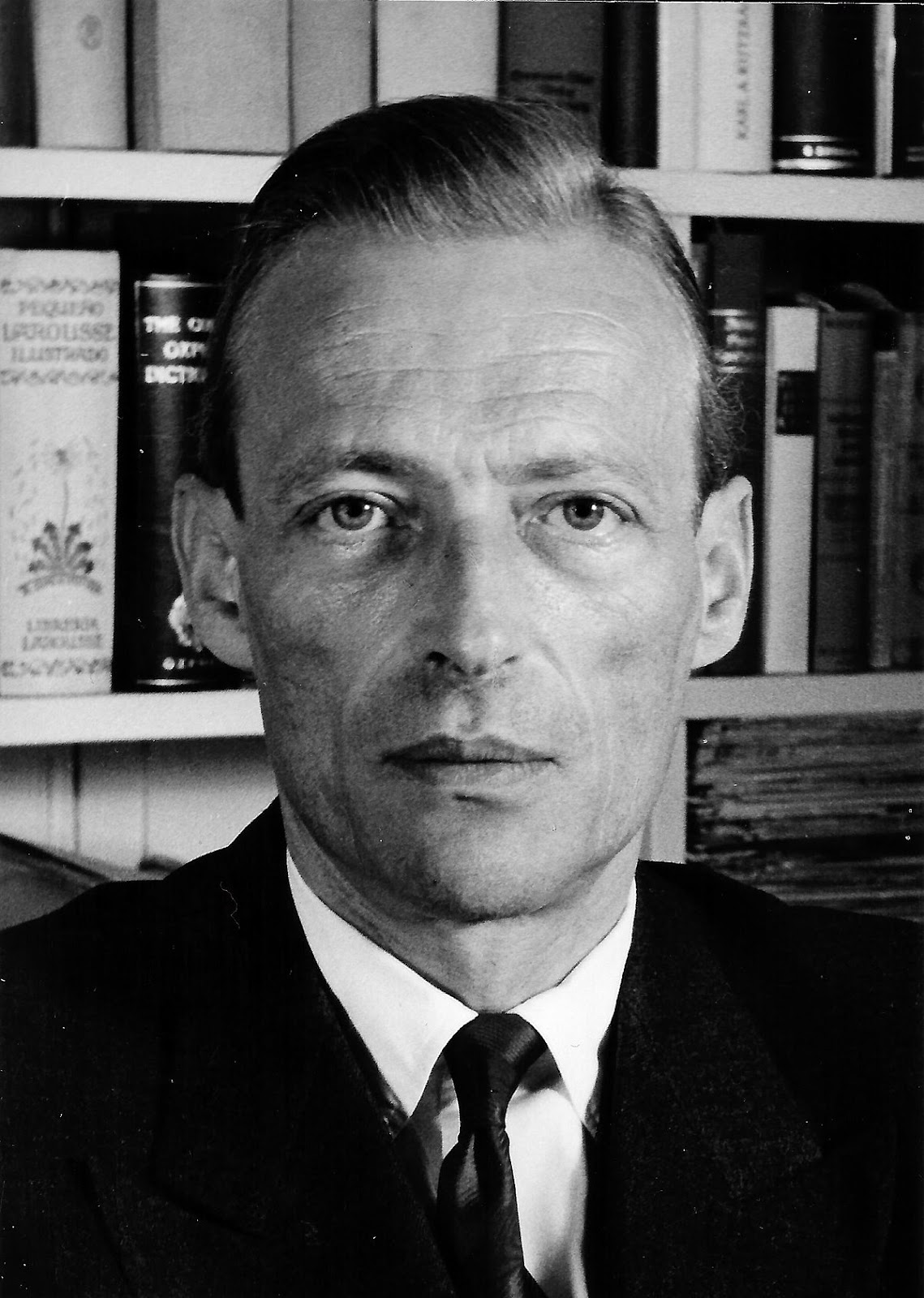
Jean Gebser
The Ever-Present Origin and Mutations of Consciousness
Jean Gebser (1905–1973) was a Swiss philosopher, cultural historian, and poet who proposed a profound theory of the origin and evolution of human consciousness. His magnum opus, The Ever-Present Origin, argues that human consciousness has undergone a series of discontinuous “mutations” or structural transformations throughout history, each fundamentally altering how humanity perceives reality, time, and space. Gebser believed that each new structure of consciousness is an “enrichment” that brings a new qualitative dimension to reality, and that older structures remain “ever-present” in our current awareness. His work provides a comprehensive framework for understanding the deep historical shifts in human psyche and culture.
Key Concepts and Contributions:
Structures of Consciousness: Gebser identified five major structures of consciousness, each with its own defining characteristics regarding its relationship to space, time, and the world:
-
Archaic Structure (Zero-dimensional): The most primal state, characterized by a complete non-differentiation between humanity and the universe. It’s a dreamless state of perfect identity with the whole, without subject-object duality.
-
Magic Structure (One-dimensional): The dawning of consciousness, marked by a sleep-like awareness and the emergence of a sense of time-free, point-like existence. Humanity experiences a magical identification with nature, where parts can stand for the whole (pars pro toto).
-
Mythical Structure (Two-dimensional): The emergence of an inner world of soul and psyche, characterized by a rudimentary sense of cyclical time. Reality is understood through stories, images, and symbols, often involving polarities and dualistic thinking (e.g., good/evil).
-
Mental/Rational Structure (Three-dimensional): This structure, dominant in Western thought since the Renaissance, is characterized by linear time, perspectival thinking, and the development of ego-consciousness. It emphasizes rationality, objectivity, and abstract thought, leading to scientific and technological advancements. Gebser also observed its “deficient” or problematic phase, leading to fragmentation and nihilism.
-
Integral Structure (Four-dimensional/Aperspectival): Gebser believed this new structure was emerging in his time, characterized by a conscious integration of all previous structures. It involves the “irruption of time” into awareness, enabling a holistic, transparent, and non-dual understanding of reality. It’s an “aperspectival” awareness, meaning it transcends fixed viewpoints and embraces the simultaneous presence of past, present, and future.
Mutations, not Evolution: Gebser differentiated his concept of “mutations” from continuous “evolution,” arguing that these are discontinuous jumps or transformations that fundamentally change the very fabric of human awareness, rather than gradual increases in complexity.
Significance for Cultural/Historical Evolution of Consciousness:
Gebser’s work holds immense significance for understanding the cultural/historical evolution of consciousness for several reasons:
-
Macro-Level Developmental Framework: He provides a sweeping, multidisciplinary framework for charting the large-scale development of human consciousness across historical epochs, moving beyond individual psychological stages to explain societal and cultural shifts in understanding.
-
Integrating Diverse Human Expressions: Gebser meticulously documented how these shifts in consciousness are reflected in various human endeavors, including philosophy, art, science, and religion, demonstrating the pervasive impact of a culture’s dominant structure of consciousness.
-
Beyond Western Rationality: His theory places Western rational thought (the mental structure) within a broader evolutionary context, suggesting its strengths but also its limitations and “deficient” aspects, while pointing toward a potential next stage of human awareness (the integral).
-
Relevance to Current Crises: Gebser’s insights into the “deficient” phase of the mental-rational structure offer a powerful lens for understanding contemporary global crises as symptoms of a consciousness structure reaching its limits, and a call for the emergence of a more integrated way of being.
In summary, Jean Gebser’s theory of mutations of consciousness provides a profound cultural and historical developmental framework that describes successive structures of consciousness (Archaic, Magic, Mythical, Mental, Integral) that have shaped human perception of reality, time, and space. His work offers a powerful lens for understanding the broad-scale evolution of human awareness and its manifestations in diverse cultural expressions.