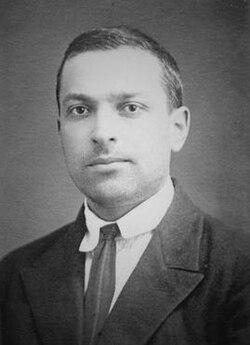
Lev Vygotsky
The Sociocultural Theory of Cognitive development
Lev Vygotsky (1896-1934) was a prominent Russian psychologist whose sociocultural theory of cognitive development profoundly altered our understanding of how individuals learn and develop. While Vygotsky’s own research primarily focused on child development, his theoretical framework has been widely applied and extended to adult development and learning, offering powerful insights into how adults continue to grow and acquire new knowledge and skills throughout their lifespan.
Core Concepts and Their Application to Adult Development
Vygotsky’s theory rests on several key principles:
-
Social Interaction is Fundamental to Learning: Vygotsky argued that all higher mental functions originate in social interactions. Knowledge is first constructed between people and then internalized within the individual.
-
For adults, this means that learning is not a solitary endeavor. Workplace training, mentorship programs, collaborative projects, peer learning, and professional communities are all powerful drivers of adult development. Adults learn effectively by engaging in dialogue, sharing experiences, and co-constructing understanding with colleagues, mentors, and experts. This highlights the importance of social learning environments in professional and personal growth.
-
The Zone of Proximal Development (ZPD): This is perhaps Vygotsky’s most famous concept. The ZPD is “the distance between the actual developmental level as determined by independent problem solving and the level of potential development as determined through problem solving under adult guidance or in collaboration with more capable peers.”
-
The ZPD is highly relevant to adult learning. Adults are constantly encountering new challenges, whether it’s mastering a new technology, taking on a more complex role, or learning a new skill in a hobby. The ZPD suggests that optimal adult learning occurs when individuals are engaged in tasks that are slightly beyond their current independent capabilities but can be achieved with the guidance and support of a “More Knowledgeable Other” (MKO). This MKO can be a manager, a senior colleague, a formal mentor, a peer, or even a digital resource. It means effective adult learning programs should challenge individuals just enough to stretch their abilities, providing support until the new skill is internalized.
-
Scaffolding: While Vygotsky himself didn’t use the term “scaffolding,” it was later developed by his followers (like Jerome Bruner and David Wood) based on his ideas. Scaffolding refers to the temporary, adjustable support provided by a more knowledgeable other to help a learner accomplish a task within their ZPD. As the learner becomes more competent, the support is gradually withdrawn.
-
Scaffolding is a critical pedagogical tool in adult education and workplace training. When an adult is learning a new task, a mentor might initially provide detailed instructions, demonstrations, and frequent feedback. As the adult gains proficiency, the mentor might reduce their involvement, allowing the learner to take more initiative and responsibility. This gradual transfer of responsibility is crucial for building independence and expertise in adults.
-
Language and Cultural Tools as Mediators: Vygotsky emphasized that psychological tools, especially language, mediate our thinking and behavior. Culture provides us with these tools (e.g., language, writing, mathematical systems, maps, problem-solving strategies) which shape how we perceive, think, and interact with the world.
-
Adults operate within specific cultural contexts, whether it’s the culture of their workplace, their profession, or their broader society. The specialized language, tools, and practices of a particular field (e.g., medical jargon, engineering software, artistic techniques) are cultural tools that mediate how adults learn and perform. Understanding these cultural tools and how they are used within a community of practice is essential for adult development. Language, in particular, continues to be a primary tool for organizing thought, planning, and self-regulation in adulthood, including through inner speech and internal dialogue.
Vygotsky’s Lasting Influence on Adult Development
While Vygotsky’s original focus was on how social forces shape the child’s mind, his core principles offer a robust framework for understanding adult development as a continuous, socially embedded process. His theory provides the theoretical underpinning for:
-
Workplace Learning: Emphasizing apprenticeships, coaching, mentoring, and collaborative team environments.
-
Professional Development: Highlighting the role of communities of practice and expert guidance in skill acquisition and adaptation to new demands.
-
Lifelong Learning: Stressing that development is not static after childhood but continues through ongoing social interaction and engagement with cultural tools and practices.
-
Contextualized Learning: Recognizing that adult learning is most effective when it is relevant to real-world problems and embedded within the social and cultural context of the learner’s life or work.
In essence, Vygotsky’s sociocultural theory provides a powerful lens through which to view adult development as a dynamic, interactive process, emphasizing that our intellectual and personal growth are deeply intertwined with our social relationships and the cultural tools we use to navigate the world.