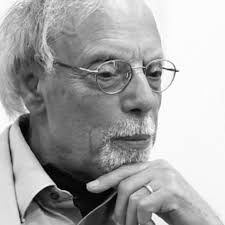
Otto Laske
Dialectical Thought Forms and the Development of Critical Thought
Otto E. Laske (1936–2015) was a German-American psychologist, philosopher, and music theorist, known for his comprehensive framework of Dialectical Thought Forms (DTF) and his contributions to the development of critical thought in adults. Building upon the foundational work of Basseches and other dialectical philosophers, Laske developed a more detailed and empirically testable model of how dialectical thinking evolves. His work often integrates cognitive development with psychoanalytic theory and applies these insights to fields like organizational development and leadership, emphasizing the role of mental models in shaping how individuals perceive and respond to complex, dynamic realities.
Key Concepts and Contributions:
Dialectical Thought Forms (DTF): Laske proposed a multi-level model of dialectical thinking, moving beyond individual schemas to describe broader “thought forms” that characterize an individual’s predominant mode of reasoning. He synthesized Basseches’s schemas into broader developmental categories, often suggesting a progression from more concrete dialectical operations to more abstract and integrated ones. Key aspects of DTF include:
-
Understanding Dynamic Change: The capacity to see phenomena as processes in motion, not static entities.
-
Integrating Opposites: The ability to perceive and work with contradictions, polarities, and tensions as inherent to reality rather than as problems to be eliminated.
-
Contextual Understanding: Recognizing that truths and meanings are not universal but are always embedded in specific contexts and relationships.
-
Systemic Perspective: Comprehending phenomena as interconnected parts of larger, evolving systems.
Laske emphasized that the development of DTFs is crucial for navigating modern complexity, where static, linear thinking often falls short.
Reconciling Subjectivity and Objectivity: Laske’s work often addressed the challenge of reconciling subjective experience with objective reality. Dialectical thinking, in his view, allows individuals to hold both personal perspectives and an understanding of external facts in dynamic tension, leading to a more comprehensive and adaptive grasp of situations.
Application in Adult Learning and Leadership: Laske extensively applied his DTF framework to adult learning, organizational change, and leadership development. He argued that leaders, in particular, need highly developed dialectical thinking capacities to manage complexity, navigate uncertainty, lead transformational change, and resolve “wicked problems” that defy simple solutions. Developing DTFs enables leaders to perceive underlying dynamics, anticipate contradictions, and integrate diverse perspectives.
Significance for Adult Development:
Laske’s work holds immense significance for understanding adult development, particularly in cognitive and organizational contexts, for several reasons:
-
Detailed Framework for Advanced Cognition: He provided a more refined and applied framework for understanding how dialectical thinking evolves as a sophisticated form of adult cognition, offering a roadmap for intellectual development beyond formal operations.
-
Link to Critical Thinking and Problem Solving: Laske’s DTFs are directly tied to the capacity for advanced critical thinking, especially in situations involving ambiguity, competing values, and systemic complexity. This is crucial for effective decision-making and problem-solving in mature adulthood.
-
Relevance to Leadership and Organizational Development: His specific application of dialectical thinking to leadership highlights how cognitive development in adults directly impacts their ability to lead complex organizations, manage paradox, and foster adaptive change.
-
Emphasizing Dynamic Mental Models: Laske’s work underscores that adult development involves not just changing beliefs but fundamentally transforming the underlying “mental models” or “thought forms” through which individuals interpret and act on the world.
In summary, Otto Laske’s work on Dialectical Thought Forms (DTF) provided a detailed and applied model for understanding advanced cognitive development in adulthood. He elaborated on how adults cultivate the capacity to grasp dynamic change, integrate contradictions, and adopt systemic perspectives, making his contributions particularly relevant to fostering critical thought and effective leadership in complex organizational and personal contexts.