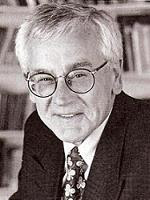
Paul Baltes
Lifespan Development and the SOC Model
Paul B. Baltes (1939–2006) was a German developmental psychologist who was a towering figure in establishing and promoting the lifespan developmental psychology perspective. He fundamentally reshaped the field by arguing that development is a lifelong process of adaptation involving both gains and losses, characterized by multidirectionality, plasticity, and historical-cultural embeddedness. His work, particularly the Selective Optimization with Compensation (SOC) model, provides a powerful framework for understanding how individuals successfully navigate the challenges and opportunities of aging.
Key Concepts and Contributions:
Core Tenets of Lifespan Development: Baltes and his colleagues proposed several foundational principles for lifespan developmental psychology:
-
Development is Lifelong: It encompasses the entire human life course, from conception to death, with no single period holding supremacy.
-
Development is Multidirectional: Not all dimensions or functions develop in a single direction; some may increase, while others decrease, and some may remain stable.
-
Development is Multidimensional: Development involves complex interactions among biological, cognitive, socioemotional, and contextual factors.
-
Development is Plastic: Development can be modified or changed at any point in the lifespan, although plasticity varies and has limits.
-
Development is Contextual: Development is influenced by various historical, cultural, social, and environmental contexts.
-
Development Involves Gains and Losses: Development is a dynamic interplay of growth (gains) and decline (losses) throughout life, with the ratio of gains to losses becoming less positive with age.
Selection, Optimization, and Compensation (SOC) Model: This is Baltes’s most influential contribution to understanding successful development and aging. It proposes that individuals manage their finite resources to maximize gains and minimize losses across the lifespan through three fundamental adaptive processes:
-
Selection: Individuals choose or narrow down their goals or domains of functioning. This can be:
-
Elective Selection: Deliberately choosing goals aligned with personal preferences or new opportunities.
-
Loss-Based Selection: Adapting to losses by reducing goals or committing to fewer, more important goals.
-
Optimization: Individuals allocate and refine resources (e.g., time, effort, skills, social support) to effectively achieve selected goals. This means practicing and investing in chosen areas.
-
Compensation: Individuals develop new ways or strategies to maintain functioning in the face of losses or declines in resources. This might involve using external aids, seeking help from others, or developing alternative skills.
The SOC model posits that the skillful application of these strategies allows individuals to maintain a high level of functioning and well-being even as they experience age-related declines.
Significance for Adult Development and Aging:
Baltes’s work holds immense significance for gerontology and adult development for several reasons:
-
Foundational Lifespan Perspective: He was instrumental in establishing the lifespan approach, emphasizing that development is a continuous, dynamic process that extends through old age, challenging the earlier focus solely on childhood.
-
Model of Successful Aging: The SOC model provides a highly influential and empirically supported framework for understanding successful aging. It shifts the focus from merely avoiding decline to actively managing life’s challenges to maintain meaningful engagement and well-being, even in the face of age-related losses.
-
Adaptive Strategies for Later Life: The SOC model offers concrete, actionable strategies for how older adults can proactively adapt to changes in physical, cognitive, and social capacities, allowing them to remain productive and satisfied.
-
Integration of Gains and Losses: Baltes’s perspective acknowledges that aging involves both losses (e.g., in speed of processing, physical strength) and potential gains (e.g., in wisdom, emotional regulation), and that successful development involves a dynamic balance between these.
-
Broad Applicability: The SOC model is not limited to aging but is a meta-model for successful development throughout life, providing a universal framework for understanding how individuals adapt to changing resources and demands at any age.
In summary, Paul Baltes’s pioneering work on lifespan developmental psychology and his Selective Optimization with Compensation (SOC) model fundamentally reshaped the understanding of adult development and aging. He provided a comprehensive framework that emphasizes development as a lifelong process of gains and losses, and offered a powerful model for how adults successfully adapt to challenges, particularly in later life, by strategically selecting goals, optimizing resources, and compensating for declines.