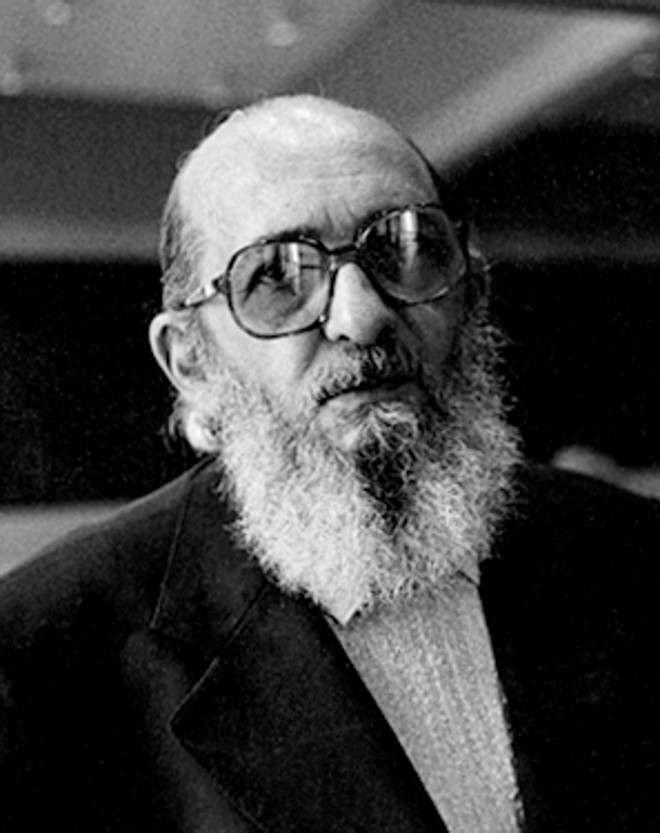
Paulo Freire
Conscientization and Problem-Posing Education
Paulo Freire (1921–1997) was a Brazilian educator, philosopher, and social theorist, celebrated for his critical pedagogy and his profound commitment to social justice. While not a developmental psychologist in the traditional sense, his work is foundational to Transformative Learning Theory, particularly its social, political, and liberating dimensions. Freire argued that true education is a process of “conscientization”—where individuals develop a critical awareness of their social, political, and economic reality, recognizing systems of oppression and their own capacity to transform that reality. His “problem-posing education” methodology is designed to facilitate this transformative process, making him a crucial figure in understanding learning as a means to adult liberation and agency.
Key Concepts and Contributions:
Conscientization (Conscientização): This is Freire’s central concept, referring to the process by which individuals move from a “naïve consciousness” (accepting their reality as given or inevitable) to a “critical consciousness.” This involves perceiving social, political, and economic contradictions, taking action against oppressive elements of reality, and developing the capacity for ongoing, critical reflection. Conscientization is a deeply personal and collective transformative learning process, leading to a new understanding of one’s place in the world and one’s agency to change it.
Banking Concept of Education vs. Problem-Posing Education: Freire sharply critiqued traditional education systems, which he called the “banking concept of education.” In this model, students are seen as empty vessels (banks) into which teachers deposit knowledge. This passive approach, he argued, perpetuates oppression by discouraging critical thought and maintaining the status quo.
In contrast, Freire advocated for Problem-Posing Education. In this approach:
-
Dialogue is Central: Learning occurs through genuine, reciprocal dialogue between teachers and learners, where both are active participants in discovering knowledge.
-
Reality as a Problem: Learners collectively reflect on their lived experiences and social realities, identifying these as “problems” to be investigated, analyzed, and ultimately transformed.
-
Praxis: Education is a cyclical process of reflection and action (praxis). Individuals critically reflect on their world, then act to change it, and then reflect again on the outcomes of their action. This continuous loop is essential for genuine transformative learning and liberation.
The Oppressed as Agents of Change: Freire famously argued that the oppressed are not merely victims but can become active subjects of their own liberation through conscientization and praxis. This emphasis on human agency and empowerment is a core tenet that resonates strongly with the goals of transformative learning.
Significance for Transformative Learning:
Freire’s work holds immense significance for Transformative Learning for several reasons:
-
Social Justice Roots: He provided the fundamental social justice and critical theory underpinnings for transformative learning. His work highlights that personal transformations are often inextricably linked to a critical awareness of social inequities and a commitment to collective liberation.
-
Empowerment and Agency: Freire’s emphasis on conscientization as a process of empowering individuals to see themselves as active shapers of their reality directly informs how transformative learning fosters adult agency, moving from a sense of helplessness to one of proactive engagement.
-
Dialogue as a Transformative Tool: He elevated dialogue to a central pedagogical practice for transformative learning. His model demonstrates how genuine, egalitarian conversation, focused on shared problems, can facilitate critical reflection and lead to new understandings and actions.
-
Praxis and Integration of Theory and Practice: The concept of praxis (reflection and action) is vital for transformative learning, ensuring that shifts in understanding lead to tangible changes in behavior and engagement with the world. This emphasizes that adult development involves not just cognitive shifts but also behavioral transformation.
-
Challenging Assumptions about Knowledge: Freire’s critique of the “banking concept” aligns with transformative learning’s aim to challenge adults’ assumptions about how knowledge is acquired and who holds authority, fostering a more self-directed and critically engaged approach to learning throughout life.
In summary, Paulo Freire’s foundational work on conscientization and problem-posing education is a cornerstone of Transformative Learning Theory, particularly for its emphasis on the social, political, and liberating dimensions of adult development. He provided a powerful framework for understanding how adults develop a critical awareness of their reality, engage in dialogue and praxis, and become active agents in transforming both their personal perspectives and their social worlds.