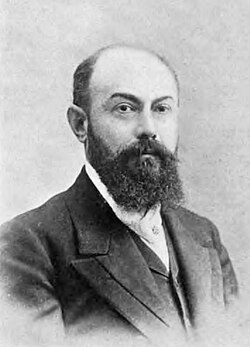
Pierre Janet
Pioneer of Dissociation and the Hierarchy of Mental Functions
Pierre Janet (1859-1947) was a pioneering French psychologist, physician, and psychotherapist, a contemporary of Sigmund Freud, who made fundamental contributions to the understanding of psychological trauma, dissociation, and the subconscious. While often overshadowed by Freud in the English-speaking world, Janet’s meticulous clinical observations and theoretical constructs laid crucial groundwork for modern psychotherapy, especially in the areas of trauma and dissociative disorders.
Key Contributions to Psychology (with implications for Development):
-
The Concept of Dissociation: Janet is most famous for systematically studying and coining the term “dissociation.” He observed patients suffering from “hysteria” (a broad 19th-century diagnosis for physical symptoms without clear organic cause, alongside amnesia, trances, etc.) and theorized that these symptoms arose from a “disaggregation” or “splitting off” of certain mental functions (thoughts, memories, emotions, perceptions) from conscious awareness.
-
He believed that dissociation occurred in response to overwhelming traumatic experiences. When an experience is too distressing to be fully integrated into the conscious mind, parts of it (memories, emotions, sensations) become compartmentalized or “dissociated.”
-
Relevance to Development: This concept is crucial for understanding how individuals cope with trauma throughout the lifespan. If traumatic experiences in childhood lead to dissociation, these unintegrated parts of the self and their associated memories can continue to impact adult behavior, emotional regulation, and self-perception, potentially manifesting as dissociative disorders or other forms of psychopathology. Janet’s work implies that healthy development requires the integration of experiences, while dissociation represents a failure of this integrative function.
-
Psychological Automatism and the Subconscious:
-
Janet’s early work, L’Automatisme Psychologique (1889), explored how certain mental activities could operate automatically, outside conscious control. He described how “subconscious” acts or “fixed ideas” (cognitive-emotional complexes often related to trauma) could influence behavior without the individual’s full awareness.
-
He coined the term “subconscious” (though Freud later popularized “unconscious”). For Janet, the subconscious contained memories or ideas that were not fully integrated into the personal consciousness, leading to psychological “disaggregation.”
-
Relevance to Development: This concept suggests that not all mental processes are immediately available to conscious reflection. Developmental experiences, particularly those that are overwhelming, can lead to the formation of subconscious patterns or “fixed ideas” that continue to operate and shape an individual’s thoughts, feelings, and behaviors into adulthood, even if the individual is not consciously aware of their origin or influence.
-
Hierarchy of Mental Functions (Psychological Tension and Force):
-
Janet developed a comprehensive model of the mind based on a hierarchy of mental “tendencies” or functions, ranging from simple reflexes to complex, volitional actions like reasoning, creativity, and social adaptation.
-
He proposed that the ability to perform higher-level functions depends on “psychological force” (the amount of available mental energy) and “psychological tension” (the capacity to effectively deploy and organize that energy). Neuroses, for Janet, were often a result of a reduction in this “psychological tension,” leading to a regression to lower-level, more automatic or disorganized mental functions.
-
Relevance to Development: This hierarchical model implies a developmental progression in mental capacity. Healthy development involves the maturation and integration of increasingly complex mental functions, allowing individuals to engage with reality more effectively and to act with greater intention and self-control. Adult development, in this view, could be seen as the continued strengthening of psychological tension and force, enabling the individual to master more complex tasks and adapt to life’s challenges without regressing to lower, less adaptive modes of functioning. Failures to develop sufficient psychological force or tension in childhood or early adulthood could limit adult coping abilities.
-
Early Insights into Trauma and its Treatment:
-
Janet was one of the first to clearly articulate a connection between past traumatic experiences and present psychological disturbances. He systematically explored how traumatic memories could be expressed through sensory perceptions, emotional states, and behavioral re-enactments.
-
His therapeutic approach focused on helping patients uncover and integrate these dissociated traumatic memories, aiming to broaden their field of consciousness and restore psychological unity. He utilized techniques like hypnosis and a form of “psychological analysis” (which predated Freud’s “psychoanalysis”).
-
Relevance to Adults: His work is foundational for modern trauma-informed therapy. It highlights how developmental experiences of trauma can fragment the psyche, leading to long-term psychological difficulties in adulthood that require specific therapeutic approaches focused on integration and processing.
In summary, Pierre Janet was a remarkably insightful and systematic observer of the human mind. His pioneering work on dissociation, the subconscious, and the hierarchical nature of mental functions provided a robust framework for understanding psychological trauma and its pervasive effects on individual development. Though often overshadowed by Freud, Janet’s theories have seen a strong resurgence in contemporary psychology, particularly in the fields of trauma, dissociative disorders, and the study of consciousness.