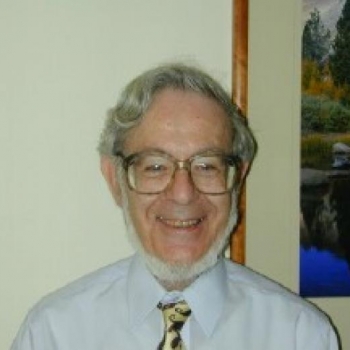
Rudolf Moos
Social Climate and Human Environments Theory
Rudolf H. Moos (1939–Present) is an American psychologist and researcher at Stanford University, widely recognized for his pioneering work in environmental psychology and the development of Social Climate Theory. Moos focused on understanding and measuring the “personality” of various human environments—from families and workplaces to classrooms and correctional facilities. His work emphasizes that the psychosocial characteristics of an environment profoundly influence the behavior, well-being, and developmental trajectories of the individuals within it, thereby offering a crucial lens for understanding how physical surroundings (and the social dynamics they facilitate) shape adult development.
Key Concepts and Contributions:
Social Climate Theory: Moos proposed that every social environment has a unique “social climate,” which is the shared perceptions of that environment’s psychosocial characteristics. He developed a series of Social Climate Scales (e.g., Family Environment Scale, Work Environment Scale, Group Environment Scale) to measure these perceived characteristics across three broad dimensions:
-
Relationship Dimensions: Assess the extent to which people are involved in the setting, how much they support each other, and how openly they express feelings (e.g., Involvement, Cohesion, Expressiveness).
-
Personal Growth Dimensions: Measure the extent to which the environment encourages personal development, autonomy, and the pursuit of individual goals (e.g., Independence, Achievement Orientation, Intellectual-Cultural Orientation).
-
System Maintenance and Change Dimensions: Measure the order, clarity, control, and innovation within the environment (e.g., Order and Organization, Rule Clarity, Control, Innovation).
Moos argued that these dimensions characterize virtually any human environment and significantly influence the well-being and adaptive functioning of individuals within them.
Person-Environment Congruence: Similar to Lawton, Moos also explored the concept of person-environment congruence, suggesting that individuals thrive when there is a good match between their personal characteristics and the social climate of their environment. A mismatch can lead to stress, dissatisfaction, and maladaptive behavior.
Environmental Stress and Coping: Moos’s later work also contributed significantly to theories of stress and coping, examining how individuals’ life contexts (including environmental factors) and their coping responses affect their adaptation and well-being. He highlighted the reciprocal link between individuals’ perceptions of their environment and their ability to cope with life challenges.
Significance for Adult Development:
Moos’s work holds immense significance for Environmental Psychology and Development for several reasons:
-
Measuring Environmental Influence: His development of empirically validated Social Climate Scales provided researchers and practitioners with concrete tools to measure and analyze the psychosocial properties of environments, allowing for a more systematic study of their impact on adult development.
-
Holistic View of Environment: Moos emphasized that “environment” includes not just physical spaces but also the prevailing social customs, relationships, and organizational structures within those spaces. This offers a comprehensive view of how adults are embedded in and shaped by their surroundings.
-
Understanding Varied Adult Contexts: His scales have been widely applied across a diverse range of adult environments (workplaces, families, residential programs, therapy groups), allowing for a comparative understanding of how different settings foster or impede adult personal growth, relationship development, and adaptation.
-
Promoting Growth-Fostering Environments: By identifying key dimensions of social climate, Moos’s work provides a blueprint for creating environments that explicitly support adult development—environments that encourage involvement, foster personal growth, and maintain a clear yet adaptable structure.
-
Interplay of Person and Environment: Moos’s emphasis on person-environment congruence highlights the dynamic interplay between individual needs and environmental characteristics, demonstrating that adult development is a continuous process of adjusting to, and shaping, the environments they inhabit.
In summary, Rudolf Moos’s Social Climate Theory and his comprehensive Social Climate Scales provide a powerful framework for understanding how the psychosocial characteristics of physical surroundings profoundly influence adult development. His work emphasizes how the relational, personal growth, and system dynamics of various human environments shape the well-being, behavior, and ongoing growth of individuals throughout their adult lives.