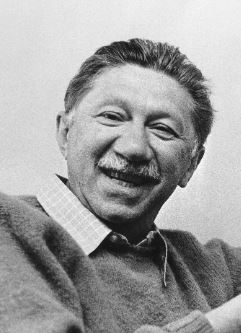
Abraham Maslow
Self-Actualization and the Hierarchy of Needs
Abraham Maslow (1908–1970) was an American psychologist and a foundational figure in humanistic psychology, often referred to as the “third force” in psychology (after psychoanalysis and behaviorism). Maslow’s work fundamentally shifted the focus of psychology from pathology and dysfunction to human potential, growth, and the pursuit of ultimate fulfillment. His most enduring contribution is the Hierarchy of Needs, which describes a developmental progression of human motivations, culminating in the lifelong drive toward self-actualization, the realization of one’s fullest potential.
Key Concepts and Contributions:
Hierarchy of Needs: Maslow proposed that human motivations are organized in a hierarchy, with basic needs at the bottom and higher-level needs at the top. Needs at lower levels must be substantially satisfied before individuals can attend to needs at higher levels. This hierarchy is often depicted as a pyramid:
-
Physiological Needs: Basic survival needs (e.g., food, water, shelter, sleep).
-
Safety Needs: Security, stability, protection from harm (e.g., personal security, financial security, health and well-being).
-
Love and Belonging Needs: Connection, intimacy, acceptance, friendship, family bonds.
-
Esteem Needs: Self-respect, achievement, competence, recognition, status from others.
-
Self-Actualization Needs: The highest level; the desire to become the most that one can be, to realize one’s full potential, and to pursue personal growth and peak experiences. This is a “being-need” (B-need), distinct from “deficiency-needs” (D-needs) below it.
Self-Actualization: For Maslow, self-actualization is not a fixed state but an ongoing, lifelong process of becoming more fully human. Self-actualized individuals are characterized by traits such as:
-
Acceptance of facts and reality.
-
Spontaneity and creativity.
-
Problem-centeredness rather than self-centeredness.
-
Autonomy and independence.
-
Deep democratic values.
-
Capacity for profound interpersonal relationships.
-
Frequent “peak experiences”—moments of intense joy, wonder, and insight.
Maslow believed that while everyone has the potential for self-actualization, few fully achieve it, as it requires overcoming many obstacles and choosing growth over fear.
Peak Experiences: These are transient moments of self-actualization, characterized by intense feelings of awe, wonder, ecstasy, unity, and a profound sense of meaning. They are typically short-lived but can have lasting transformative effects, reinforcing an individual’s drive toward personal growth.
Significance for Adult Development:
Maslow’s work holds immense significance for Existential/Humanistic Developmental theory for several reasons:
-
Lifelong Growth and Potential: He fundamentally shifted the focus of development to emphasize inherent human potential and the continuous, lifelong pursuit of growth and fulfillment, rather than just addressing pathology or focusing solely on early life stages.
-
Motivation for Adult Development: The Hierarchy of Needs provides a powerful framework for understanding the diverse motivations that drive adults’ behavior, from basic security needs in early career stages to the ultimate pursuit of meaning and purpose in later life.
-
Defining Healthy Adult Functioning: His characteristics of self-actualized individuals provide a compelling vision of mature adult development, emphasizing autonomy, creativity, authenticity, and deep relational capacity as hallmarks of psychological health.
-
Meaning-Making as a Core Drive: By placing self-actualization at the pinnacle, Maslow implicitly highlights the human need for meaning, purpose, and transcendence as fundamental drivers of adult development.
-
Influence on Therapy and Positive Psychology: His humanistic approach profoundly influenced person-centered therapy and laid much of the groundwork for the modern positive psychology movement, both of which focus on fostering strengths and promoting optimal human functioning in adulthood.
In summary, Abraham Maslow’s Hierarchy of Needs and his concept of self-actualization are central to Existential/Humanistic Developmental theory. He provided a transformative perspective on adult development, emphasizing the lifelong, innate human drive to fulfill one’s unique potential, find meaning, and experience profound moments of being, thereby defining a path for optimal human flourishing.