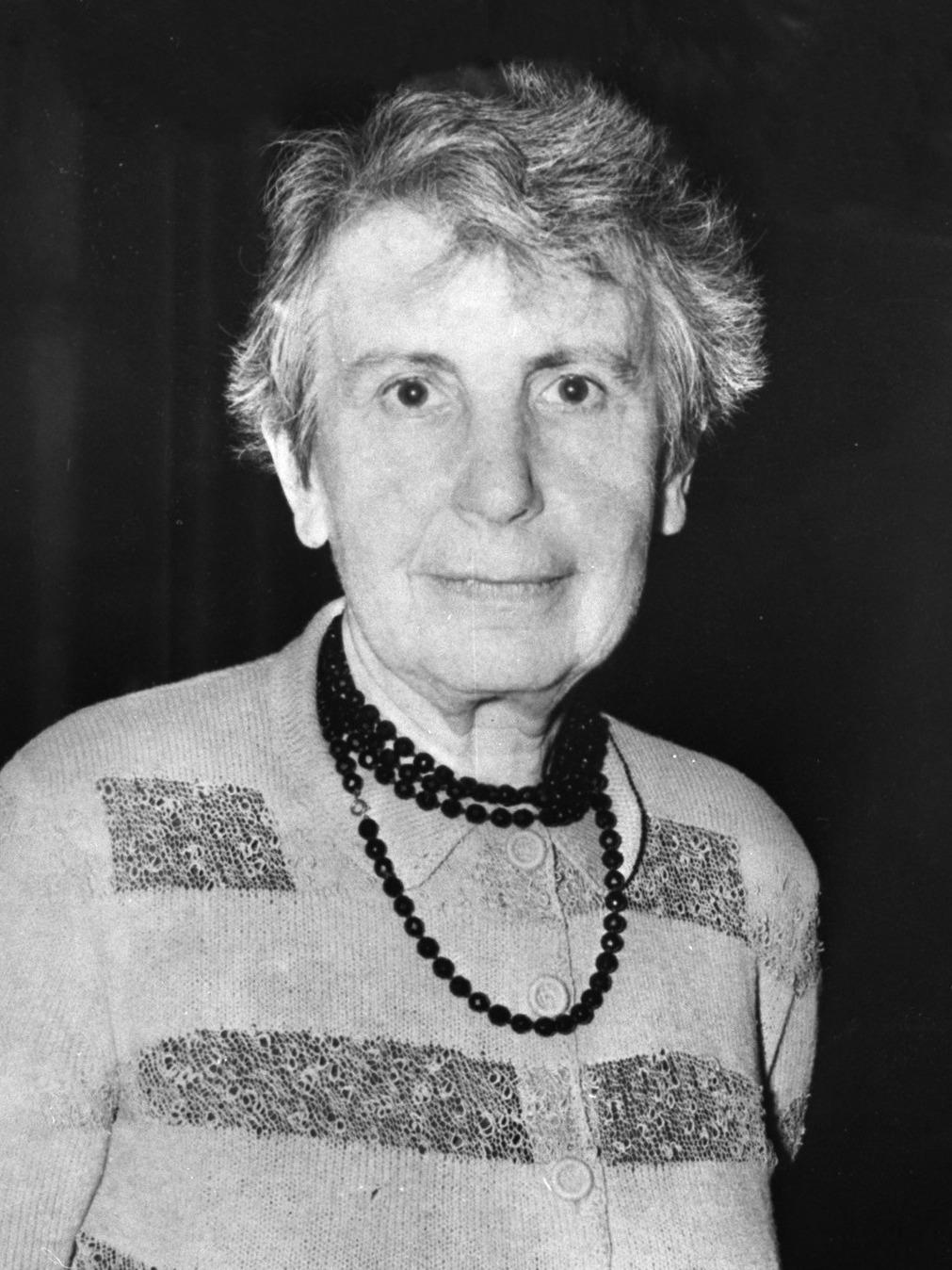
Anna Freud
Architect of Ego Psychology and Child Psychoanalysis
Anna Freud was an Austrian-born British psychoanalyst, the youngest daughter of Sigmund Freud, who became a pivotal figure in the development of ego psychology and is widely considered the founder of child psychoanalysis. While she built directly upon her father’s foundational theories, she significantly expanded their scope by emphasizing the ego’s adaptive capacities and focusing on the unique developmental needs of children. Her insights, though primarily derived from work with children, have profound implications for understanding adult personality and psychopathology.
Key Contributions to Development (and their relevance to Adults)
-
Systematization of Ego Defense Mechanisms: This is perhaps Anna Freud’s most enduring and widely recognized contribution. Building on her father’s initial ideas, she meticulously categorized, described, and explained various defense mechanisms in her seminal work, The Ego and the Mechanisms of Defense (1936). These are unconscious strategies employed by the ego to protect the individual from anxiety and conflict arising from internal (id vs. superego) or external threats.
-
Relevance to Adults: While originating in childhood, the patterns of using these defenses are central to adult personality and coping. Individuals often rely on a consistent set of defenses throughout their lives. The maturity of these defenses (e.g., shifting from denial or repression to more adaptive ones like sublimation or humor) is a key indicator of psychological health in adulthood. Her work provided a precise vocabulary for discussing how adults manage stress, avoid uncomfortable truths, and maintain psychological equilibrium, even if sometimes maladaptively.
-
Examples include: repression, denial, projection, displacement, intellectualization, rationalization, reaction formation, regression, and sublimation.
-
Pioneering Child Psychoanalysis: Recognizing that children’s psychological makeup and therapeutic needs differed significantly from adults’, Anna Freud adapted psychoanalytic techniques for working with them. She emphasized that children’s developing ego and superego require a different approach than the free association used with adults.
-
She championed the use of play as a therapeutic tool, seeing it as a natural means for children to express their internal conflicts and feelings, often unconsciously.
-
She highlighted the importance of establishing a strong therapeutic alliance with the child, often involving the parents, which was distinct from the adult analytic setting.
-
Relevance to Adults: Her work with children reinforced the Freudian notion that the foundations of adult psychological health are laid in childhood. Understanding the developmental trajectory of defenses and ego functions in childhood provides crucial insight into the origins of adult personality styles and psychopathology. If core developmental tasks or emotional conflicts are unresolved in childhood, they often manifest as difficulties in adult life.
-
The Concept of “Developmental Lines”: Anna Freud introduced the idea of “developmental lines” as a means of assessing a child’s overall maturity and adaptive capacity across various domains of functioning. These are not rigid stages but rather a continuous progression of the ego’s increasing mastery over internal impulses and external reality, representing an interaction between innate maturational pushes and environmental influences.
-
Example Developmental Lines:
-
From dependency to emotional self-reliance and adult object relationships (e.g., from an infant’s biological unity with the mother to the capacity for reciprocal, stable adult relationships).
-
From egocentricity to companionship (e.g., from self-centeredness to the ability to form genuine friendships).
-
From suckling to rational eating.
-
From play to work (the development of pleasure in task completion and problem-solving).
-
Relevance to Adults: While applied to children, the concept of developmental lines is highly relevant to understanding adult functioning. An adult’s level of maturity, their capacity for intimate relationships, their ability to work productively, and their independence can be understood as the culmination of progress (or lack thereof) along these fundamental developmental lines. When adults struggle with certain aspects of life, a psychoanalytic perspective influenced by Anna Freud might examine where their development might have been “stuck” or regressed along a particular developmental line.
-
Emphasis on the Ego’s Adaptive Function: Moving beyond Freud’s primary focus on the id’s drives, Anna Freud, as a leading figure in ego psychology, placed greater emphasis on the ego’s active role in mediating between the id, superego, and external reality. She saw the ego not just as a mediator but as an autonomous structure capable of growth, learning, and adapting to the world.
-
Relevance to Adults: This focus on the ego’s adaptive capacity highlights the potential for adult resilience and psychological growth. Even in the face of ongoing internal conflicts or external stressors, the ego strives to find adaptive solutions. Therapeutic interventions often aim to strengthen the ego’s ability to cope more effectively.
In summary, Anna Freud’s legacy is marked by her profound influence on understanding the developing ego and its defensive functions. Her work, while centered on childhood, provides a foundational understanding of how early psychological structures and coping mechanisms solidify, directly shaping the personality, adaptive capacities, and potential vulnerabilities of the adult individual.