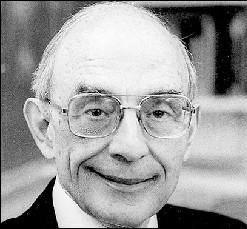
Chris Argyris
Organizational Learning, Action Science, and Adult Development
Chris Argyris (1923–2012) was an American organizational theorist, psychologist, and Sterling Professor Emeritus of Education and Organizational Behavior at Yale University. He is widely recognized as a pivotal figure in the fields of organizational learning, organizational development, and action science. Argyris’s work consistently focused on how individuals and organizations hinder their own effectiveness and learning through defensive routines, and conversely, how they can achieve genuine growth and transformation by reflecting on and changing their underlying assumptions and behaviors. His contributions profoundly connect organizational dynamics with principles of adult learning and psychological maturity.
Key Concepts and Contributions:
Models of Action: Theory-in-Use vs. Espoused Theory: Argyris distinguished between what people say they believe and intend (their “espoused theory”) and what they actually do (their “theory-in-use”). He observed that a significant gap often exists between these two, leading to ineffective actions and a lack of authentic communication within organizations. Understanding this gap is crucial for adult development, as it highlights the self-deception and defensive routines that prevent genuine learning and growth.
Single-Loop vs. Double-Loop Learning: This is one of Argyris’s most influential concepts:
-
Single-Loop Learning: Involves detecting and correcting errors without questioning the underlying governing values or assumptions. It’s like a thermostat that simply adjusts the temperature. This type of learning is essential for efficiency but doesn’t lead to fundamental change or deeper understanding.
-
Double-Loop Learning: A more profound form of learning that occurs when individuals or organizations not only detect and correct errors but also inquire into and challenge the governing values and assumptions that led to the errors. It’s like asking why the thermostat is set to a certain temperature in the first place, or questioning the need for a thermostat at all. This reflective process is central to genuine adult learning and the development of more complex meaning-making.
Argyris argued that most organizational and individual learning is single-loop, contributing to stagnation and the perpetuation of ineffective patterns. Double-loop learning, while more challenging, is necessary for true innovation and developmental transformation.
Model I vs. Model II Theories-in-Use: Argyris identified two contrasting sets of underlying assumptions that drive behavior:
-
Model I (Defensive Routines): This is the predominant theory-in-use in many organizations, characterized by a focus on unilateral control, maximizing winning and minimizing losing, suppressing negative feelings, and avoiding open inquiry. It leads to self-sealing processes, little genuine learning, and reinforces defensive behaviors.
-
Model II (Productive Learning): This alternative theory-in-use emphasizes valid information, free and informed choice, and internal commitment. It involves open inquiry, testing assumptions publicly, speaking transparently, and genuinely collaborating. It fosters double-loop learning and is conducive to genuine adult development and organizational effectiveness.
Action Science and Action Research: Argyris co-developed Action Science, a research approach that combines scientific rigor with practical intervention. It aims to help individuals and organizations discover and change their theories-in-use by reflecting on their actions and the consequences. This methodology is inherently developmental, as it involves active participation in learning and transforming one’s own assumptions and behaviors.
Significance for Adult Development:
Argyris’s work holds immense significance for adult development, particularly in professional and organizational contexts, for several reasons:
-
Learning as a Developmental Process: He framed adult learning not just as acquiring new skills, but as a deep, transformative process of questioning fundamental assumptions and changing ingrained behavioral patterns (double-loop learning). This elevates organizational learning to a key driver of adult psychological maturity.
-
Addressing Developmental Stagnation: Argyris provided powerful insights into why adults and organizations often get “stuck” in ineffective patterns. His concept of defensive routines and Model I theories-in-use explains the psychological barriers to growth, such as fear of vulnerability, need for control, and avoidance of difficult truths, which hinder adult development in any context.
-
Promoting Adult Autonomy and Agency: His advocacy for Model II behavior encourages adults to move towards greater self-awareness, personal responsibility, and the capacity for free and informed choice. This aligns directly with adult developmental theories that emphasize increasing autonomy, authenticity, and integrated selfhood.
-
Connecting Individual and Organizational Maturity: Argyris compellingly demonstrated that organizational effectiveness and individual adult development are deeply intertwined. A mature, learning organization fosters individual growth by creating a psychologically safe environment for inquiry and challenging assumptions, while developed adults are essential for an organization to engage in double-loop learning and adapt.
-
Therapeutic and Coaching Applications: His concepts, particularly double-loop learning and Model II behaviors, have been widely adopted in adult learning programs, leadership development, coaching, and therapeutic interventions to help individuals understand and overcome their “immunities to change” and develop more effective ways of relating and acting.
In summary, Chris Argyris provided groundbreaking theories on organizational learning and action science that fundamentally connect individual adult development with organizational effectiveness. By illuminating the dynamics of defensive routines and advocating for double-loop learning, he offered a profound framework for understanding how adults can achieve deeper levels of self-awareness, challenge their ingrained assumptions, and foster continuous growth and genuine effectiveness in their professional and personal lives.