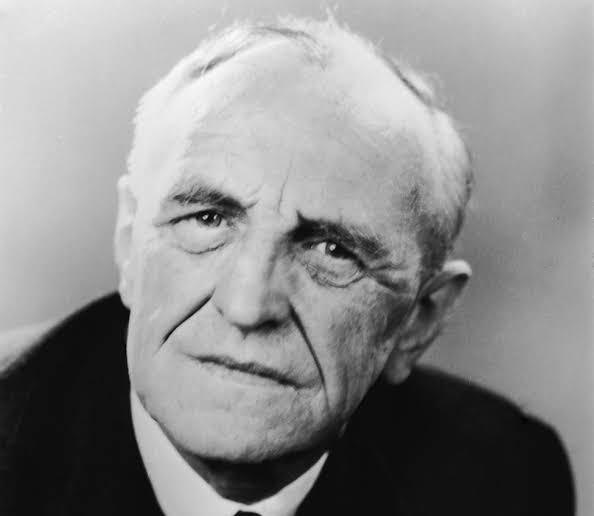
Donald W. Winnicott
The Analyst of Holding, Play, and the True Self
Donald W. Winnicott (1896-1971) was a British pediatrician and psychoanalyst, a significant figure in the Object Relations school alongside Melanie Klein, though he developed his own distinct and highly influential perspective. While his clinical work and theoretical focus centered primarily on the mother-infant relationship and early childhood development, his concepts offer profound insights into the foundations of healthy adult personality, creativity, and the capacity for genuine living. His work is characterized by its warmth, clinical wisdom, and emphasis on the facilitating environment.
Key Contributions Relevant to Adult Development:
-
The “Good-Enough Mother”: This is arguably Winnicott’s most famous concept. He argued against the idea of a perfect mother, proposing instead that what an infant needs is a mother (or primary caregiver) who is “good-enough.” This mother is one who:
-
Adapts almost completely to the infant’s needs in the very beginning, creating an illusion of omnipotence for the baby.
-
Gradually and sensitively frustrates the infant’s omnipotence as the infant matures, allowing them to encounter reality in manageable doses.
-
Relevance to Adults: The experience of a good-enough mothering environment in infancy is crucial for the development of a healthy adult. It fosters a sense of basic trust, resilience, and the capacity to tolerate frustration without being overwhelmed. Adults who did not experience “good-enough” care might struggle with anxiety, insecurity, the inability to cope with reality, or an insatiable need for external validation, often unconsciously seeking the “perfect” holding environment they lacked.
-
Holding Environment: Building on his pediatric experience, Winnicott emphasized the physical and psychological “holding environment” provided by the mother. This is not just physical containment but the total provision of care and support that enables the infant to feel safe, secure, and to begin to exist and develop spontaneously. It’s the mother’s capacity for empathy, responsiveness, and consistent presence.
-
Relevance to Adults: The internalized “holding environment” from childhood forms the basis for an adult’s capacity for self-regulation, self-soothing, and a sense of internal security. In therapy, the analyst often serves as a “holding environment” for the patient, allowing them to experience and work through early unmet needs. Adults who lack this internalized holding may struggle with emotional dysregulation, chronic anxiety, or difficulty forming stable, secure attachments in relationships. They may constantly seek external sources of “holding” or feel overwhelmed by internal states.
-
True Self and False Self: Winnicott’s most enduring contribution to personality theory.
-
True Self: This is the spontaneous, authentic core of the individual, rooted in early bodily experiences and gestures. It is the part of the self that feels real, alive, and creative. It develops when the good-enough mother sensitively responds to the infant’s genuine needs and spontaneous gestures.
-
False Self: This develops as a protective mechanism when the infant’s genuine needs are not met, and instead, they are forced to comply with the demands of the environment. The False Self is an elaborate facade or adaptation that hides and protects the vulnerable True Self. It can manifest as excessive compliance, superficiality, or a sense of inner emptiness.
-
Relevance to Adults: For Winnicott, the goal of healthy adult development (and therapy) is the recovery and flourishing of the True Self. Many adults experience a pervasive sense of inauthenticity, emptiness, or a feeling of constantly performing for others, which Winnicott would attribute to the dominance of a False Self system. He argued that adult creativity, vitality, and genuine relationships spring from the True Self. Psychopathology, such as depression or personality disorders, can be understood as expressions of a True Self that has been too deeply buried or damaged.
-
Transitional Objects and Phenomenon: These are the first “not-me” possessions that infants use (e.g., a blanket, a teddy bear) as comfort in the space between the mother’s omnipotence and the baby’s growing awareness of reality. It’s a bridge between subjective fantasy and objective reality.
-
Relevance to Adults: The capacity for play, creativity, cultural engagement (art, religion, humor), and healthy fantasy in adulthood can be seen as derivatives of the transitional phenomenon. These are “intermediate areas of experience” where adults can be spontaneous, explore meaning, and express their True Self. A lack of this capacity might manifest as rigid thinking, an inability to play, or a difficulty engaging with symbols and culture, indicating a struggle with the boundary between inner and outer reality.
-
The Capacity to Be Alone: Winnicott argued that the most profound experience in infancy is being alone in the presence of the mother (or another reliable person). This experience, where the infant can relax and simply “be” without needing to perform, forms the foundation for the adult’s capacity to tolerate solitude, engage in self-reflection, and feel secure in their own being.
-
Relevance to Adults: The ability to truly be alone, not lonely, is a hallmark of emotional maturity and a healthy True Self in adulthood. It is essential for creativity, introspection, and maintaining one’s sense of self in relationships. Adults who cannot tolerate being alone may constantly seek distraction or external company, indicative of an insecure internalized holding environment.
In summary, Donald Winnicott’s contributions to adult development, though rooted in his observations of infancy, are profound. He provides a framework for understanding the deep impact of early caregiving on the adult’s capacity for spontaneity, authenticity, self-regulation, and the ability to form genuine, meaningful relationships. His concepts of the good-enough mother, the holding environment, and the True and False Self offer powerful lenses through which to analyze adult personality, psychopathology, and the pursuit of a vital, creative life.