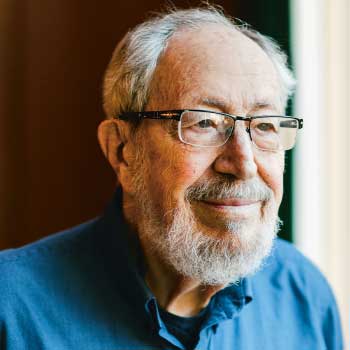
Edgar H. Schein
Organizational Culture, Career Dynamics, and Humble Inquiry
Edgar H. Schein (1928–2023) was a distinguished American organizational psychologist, professor emeritus at the MIT Sloan School of Management, and a foundational figure in the field of organizational development. His extensive contributions span several critical areas, including organizational culture, career dynamics, and process consultation. Schein’s work consistently emphasized the intricate relationship between individuals and their organizational environments, illuminating how organizations shape individual growth and how individuals, in turn, contribute to and transform organizational systems. He was deeply concerned with the practical application of psychological theory to help individuals and organizations thrive.
Key Concepts and Contributions:
Organizational Culture: This is perhaps Schein’s most widely recognized contribution. He defined organizational culture as “a pattern of shared basic assumptions that the group learned as it solved its problems of external adaptation and internal integration, that has worked well enough to be considered valid and, therefore, to be taught to new members as the correct way to perceive, think, and feel in relation to those problems.” He proposed three levels of culture:
-
Artifacts: The visible, tangible structures and processes (e.g., office layout, dress code, rituals, stories).
-
Espoused Values: The strategies, goals, and philosophies explicitly stated by the organization (e.g., mission statements, values lists).
-
Basic Underlying Assumptions: The unconscious, taken-for-granted beliefs, perceptions, thoughts, and feelings that are the ultimate source of values and actions. These are the deepest level and most difficult to change.
Schein argued that understanding and influencing these underlying assumptions is crucial for effective organizational change and for recognizing how individuals develop within (and are shaped by) their cultural context.
Career Anchors: Stemming from his research on adult career development, Schein introduced the concept of “career anchors.” A career anchor is a self-perceived pattern of talents, motives, and values that guides and constrains an individual’s career choices. These anchors typically develop and crystallize in early career experiences (roughly 5-10 years into one’s working life) as individuals gain feedback on their skills, abilities, and what truly motivates them. While relatively stable once formed, they evolve with significant life experiences. Schein identified several common career anchors, including:
-
Technical/Functional Competence: Driven by expertise in a specific field.
-
General Managerial Competence: Motivated by leadership and responsibility.
-
Autonomy/Independence: Prioritizing freedom and self-direction.
-
Security/Stability: Seeking long-term employment and predictable work.
-
Entrepreneurial Creativity: Desire to create new products or organizations.
-
Service/Dedication to a Cause: Driven by a desire to make a difference.
-
Pure Challenge: Seeking difficult problems to overcome.
-
Lifestyle: Integrating work with personal and family needs.
This concept highlights that adult career development is not just about external progression but also about aligning one’s work with deep personal drivers.
Process Consultation and Humble Inquiry: Schein also made significant contributions to the practice of organizational consulting through “Process Consultation.” This approach emphasizes helping clients perceive, understand, and act upon process events in their organizational environment. More recently, he developed the concept of “Humble Inquiry,” advocating for a relational approach to leadership and consulting that focuses on asking open-ended questions with genuine curiosity and respect, building trust and psychological safety. This method fosters a learning environment crucial for both individual and organizational adaptation and development.
Significance for Adult Development:
Schein’s work holds immense significance for adult development, particularly in an organizational context, for several reasons:
-
Intertwined Individual and Organizational Growth: He compellingly demonstrates that individual adult development is inextricably linked to the organizational environments people inhabit. Organizational culture shapes what behaviors are valued, what learning opportunities are available, and how individuals perceive success and failure, thereby influencing their developmental trajectories.
-
Meaning-Making in Career: His Career Anchors theory provides a framework for understanding the internal, subjective dimensions of adult career development. It helps individuals (and those who guide them) to recognize their core motivations and values, fostering self-awareness and promoting career choices that lead to greater satisfaction and psychological well-being throughout adulthood. This is crucial for adults navigating career changes, mid-career shifts, and retirement.
-
Learning and Adaptation in Adulthood: Schein’s work on organizational learning, particularly through “Humble Inquiry,” highlights how adults can continue to learn and adapt in complex, dynamic environments. By creating psychologically safe spaces for genuine questioning and mutual learning, organizations can foster continuous development for their members, challenging defensive routines that hinder adult growth.
-
Leadership as Developmental Facilitator: His theories imply that effective leadership involves not just managing tasks but also shaping a culture that supports individual growth, fosters learning, and enables individuals to align their personal anchors with organizational goals. This positions leaders as key facilitators of adult development within the workplace.
In summary, Edgar H. Schein provided a rich and enduring theoretical framework that illuminates how adults develop within organizational settings. Through his concepts of organizational culture, career anchors, and humble inquiry, he underscored the dynamic interplay between individual aspirations and organizational realities, offering profound insights into the lifelong process of personal and professional growth in the workplace.