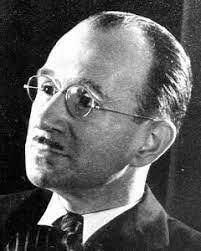
Harry Stack Sullivan
The Interpersonal Theory of Psychiatry
Harry Stack Sullivan was an American psychiatrist and psychoanalyst who developed the Interpersonal Theory of Psychiatry. He is unique among early psychoanalytically trained theorists for his radical emphasis on the social and interpersonal context as the primary determinant of personality development and mental health. While his work built upon Freudian concepts, he significantly departed by asserting that the “self” cannot exist or be understood in isolation; it is constantly shaped by and manifested through its interactions with others.
Sullivan essentially argued that psychological problems, and indeed the very structure of personality, stem from disturbed interpersonal relationships. His focus was less on internal psychosexual drives (like Freud) and more on the anxiety and self-esteem issues that arise from our interactions with significant others throughout life.
Key Concepts and Contributions to Development:
-
The Self-System: This is a central concept for Sullivan. The self-system is an organization of security operations that a person develops to avoid anxiety and protect their self-esteem. It forms early in life based on appraisals from significant others.
-
“Good Me,” “Bad Me,” “Not Me”: These are the three main components of the self-system.
-
Good Me: Parts of the self associated with positive, anxiety-reducing experiences (e.g., parental approval).
-
Bad Me: Parts of the self associated with anxiety-provoking experiences and parental disapproval (e.g., behaviors that lead to punishment).
-
Not Me: Parts of the self associated with intense anxiety, dread, and horror; these are disassociated from awareness (e.g., terrifying experiences or impulses).
-
The self-system functions to maintain security and reduce anxiety, often at the cost of authentic self-expression.
-
Dynamisms: These are enduring patterns of energy transformation that characterize an individual. They are ways of behaving that satisfy needs or reduce anxiety.
-
Malevolence: A dynamism developed when a child feels unable to secure tenderness from others and concludes that “living among others is painful.” It’s a pervasive feeling of living among enemies.
-
Lust: A dynamism that arises in adolescence, focusing on sexually gratifying relationships.
-
Security Operations: Specific ways of behaving to reduce anxiety, often unconsciously (e.g., selective inattention, verbalizations that avoid painful topics). These are similar to Freud’s defense mechanisms but are viewed through an interpersonal lens.
-
Personifications: These are mental images or stereotypes that individuals develop about themselves and others. They are often oversimplified and may not reflect reality.
-
Examples: A child might develop a “good mother” or “bad mother” personification based on their early interactions. These personifications guide future interpersonal relationships.
-
Stages of Interpersonal Development (Epochs): Sullivan proposed a series of developmental “epochs,” each characterized by specific interpersonal needs and opportunities for learning to relate to others. Failure to successfully navigate an earlier stage can lead to difficulties in later relationships and the development of psychopathology. While not strictly age-bound, they typically follow a sequence:
-
Infancy (Birth-1 year): Need for tenderness from the mothering one. Key learning is differentiating between “good” and “bad” nursing experiences.
-
Childhood (1-5 years): Need for adult participation and approval. Development of speech and delayed gratification.
-
Juvenile Era (5-8 years): Need for peer acceptance and social interaction. Learning cooperation, competition, and compromise with equals.
-
Preadolescence (8-12 years): The most crucial stage for mental health. Characterized by the need for a chum (a same-sex, intimate, reciprocal relationship). This deep friendship serves as a crucible for learning genuine intimacy and empathy. Failure here is particularly detrimental.
-
Early Adolescence (12-16 years): Emergence of lust and heterosexual interests. Need for both intimacy and sexual gratification.
-
Late Adolescence (16-early 20s): Establishment of a stable sense of self, integration of intimacy and lust, and formation of a lasting interpersonal relationship.
-
Adulthood: This stage is characterized by the consolidation of all previous learning and the establishment of a fully human capacity for love and interpersonal competence, integrating needs for intimacy, security, and lust in a mature fashion.
Sullivan’s Contribution to Adult Development:
While his stages primarily covered childhood and adolescence, Sullivan’s theory has profound implications for adult development:
-
Lifelong Impact of Early Relationships: He strongly emphasized that adult personality and psychological well-being are a direct product of the quality of early interpersonal relationships, particularly the initial mother-infant bond and later peer “chum” relationships.
-
Anxiety as a Core Motivator: Anxiety, originating in interpersonal disapproval, is a primary driving force behind personality development and is central to understanding adult emotional difficulties. Adults continue to engage in “security operations” to avoid anxiety, which can hinder their interpersonal effectiveness.
-
Therapeutic Focus on Interpersonal Patterns: For Sullivan, psychological problems in adulthood are rooted in distorted or inadequate interpersonal patterns established in earlier life. Therapy (which he called “participant observation”) involves analyzing and correcting these maladaptive patterns in the “here and now” of the therapeutic relationship, aiming to improve the patient’s capacity for genuine intimacy and reduce anxiety.
-
The Importance of Intimacy in Adulthood: The successful navigation of earlier stages, especially preadolescence, is crucial for the adult’s capacity for mature, intimate, and reciprocal relationships, which he saw as the hallmark of psychological health.
In essence, Harry Stack Sullivan provided a powerful framework for understanding personality and psychopathology not as purely intrapsychic phenomena, but as products of the dynamic interplay of individuals within their social environments. His emphasis on interpersonal relationships as the crucible of development continues to influence family therapy, social psychology, and contemporary relational psychoanalysis.