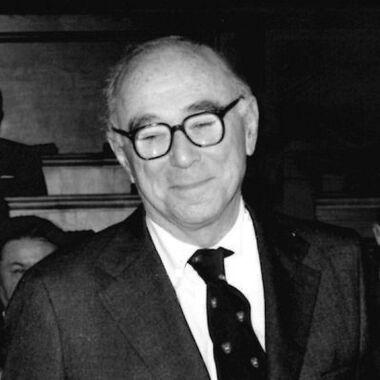
Jerome Bruner
Modes of Representation, Scaffolding, and the Construction of Knowledge
Jerome Bruner (1915-2016) was a highly influential American psychologist who played a pivotal role in the “cognitive revolution,” shifting psychology’s focus from behaviorism to the study of mental processes. A prominent constructivist, Bruner emphasized that individuals are not passive recipients of information but active constructors of their own knowledge and understanding. His work significantly contributed to how we comprehend the development of thinking, reasoning, and mental structures, particularly in educational contexts.
Bruner’s key contributions revolve around several interconnected concepts:
-
Modes of Representation: Bruner proposed that individuals, especially children, develop progressively more sophisticated ways of representing their experiences and knowledge. These modes are:
-
Enactive Representation: (0-1 year) Knowledge is represented through physical actions and motor responses. Learning is primarily through doing (e.g., learning to ride a bike).
-
Iconic Representation: (1-6 years) Knowledge is represented through sensory images, often visual ones. Learning involves mental pictures and perceptual organization (e.g., remembering a route by visualizing landmarks).
-
Symbolic Representation: (7 years onwards) Knowledge is represented through abstract symbols, such as language, logic, and mathematical systems. This allows for more abstract thought, manipulation of ideas, and understanding of complex concepts (e.g., understanding abstract mathematical theorems). Bruner argued that these modes are not discrete stages but rather co-exist, with symbolic representation becoming increasingly dominant as children develop.
-
Scaffolding: Inspired by Vygotsky’s Zone of Proximal Development (ZPD), Bruner introduced the term “scaffolding” to describe the temporary, supportive framework provided by a more knowledgeable person (e.g., parent, teacher) to help a learner master a new skill or concept. This support is gradually withdrawn as the learner becomes more competent. Scaffolding is crucial for developing problem-solving abilities and internalizing cognitive strategies that would be beyond the learner’s independent reach.
-
Discovery Learning: Bruner was a strong advocate for discovery learning, a pedagogical approach where learners are encouraged to discover facts and relationships for themselves through exploration and problem-solving, rather than being passively taught. He believed this approach fostered active engagement, intrinsic motivation, and deeper understanding, leading to better retention and the development of higher-order thinking skills.
-
Spiral Curriculum: Stemming from his belief in discovery learning, Bruner proposed the spiral curriculum, where foundational concepts are introduced early in a simplified form and then revisited in increasing complexity at higher grade levels. This allows students to continually build upon their understanding and reinforces mental structures.
In essence, Jerome Bruner’s work underscored the active and constructive nature of cognitive development. He illuminated how mental structures evolve through different representational systems and emphasized the critical role of social interaction and guided learning in enabling individuals to develop advanced thinking, reasoning, and problem-solving capacities. His ideas profoundly influenced educational theory and practice, advocating for learning environments that empower learners to actively build their own knowledge.