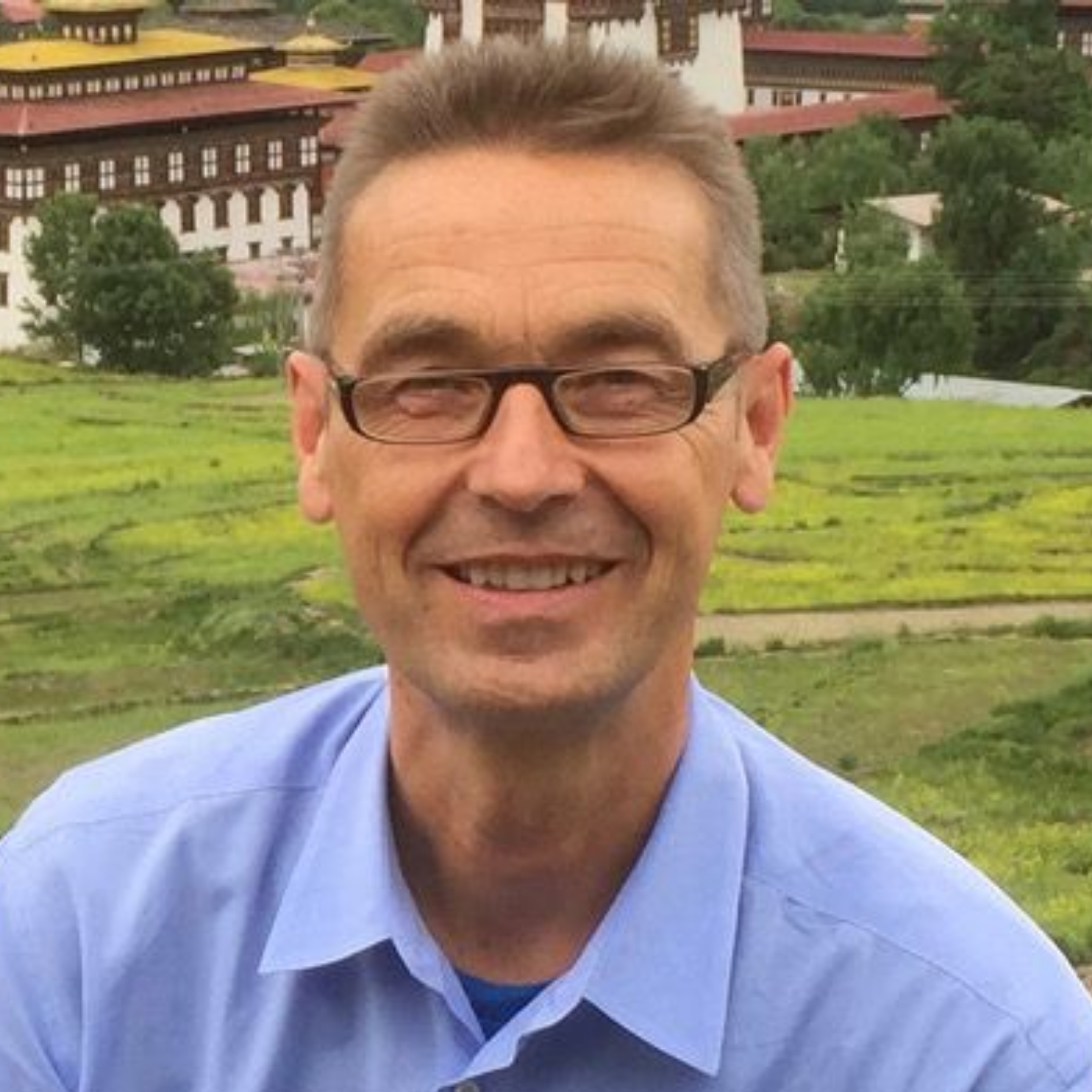
Otto Scharmer
Theory U and Presencing for Transformative Adult Development
Otto Scharmer (1961–Present) is a German economist, senior lecturer at the MIT Sloan School of Management, and co-founder of the Presencing Institute. He is best known for developing Theory U, a framework for leading profound systemic change in organizations, institutions, and society. Scharmer’s work goes beyond conventional problem-solving to emphasize the critical role of the leader’s or innovator’s inner state of awareness and their capacity to connect with an emerging future. His contributions are deeply relevant to adult development by outlining a journey of personal and collective transformation that requires individuals to cultivate new ways of thinking, sensing, and acting.
Key Concepts and Contributions:
Theory U: Scharmer’s core framework, Theory U, describes a process for leading profound, transformative change that involves descending into the “U” (suspending old habits of thought, feeling, and will), sensing deeply, and then ascending with new ways of thinking and acting that are aligned with an emerging future. The “U” process typically involves seven key movements:
-
Co-initiating: Establishing common intent and creating a shared container.
-
Co-sensing: Observing, listening, and immersing oneself in the field of concern to gather data and empathy. This involves moving beyond preconceived notions and truly seeing what is, including diverse perspectives.
-
Presencing: This is the deepest point of the U, a blend of “sensing” and “presence.” It involves connecting to a deeper source of knowing, accessing intuition, and sensing the highest future possibility. This is a crucial point of inner transformation.
-
Co-creating: Crystallizing new insights and intentions through prototyping and visualizing future possibilities.
-
Co-evolving: Integrating new practices into the system, iterating, and scaling up the new initiatives.
Three Divides and Three Openings: Scharmer identifies three fundamental “divides” that prevent effective change and development: the ecological divide (separation from nature), the social divide (separation from others), and the spiritual-cultural divide (separation from one’s authentic self). Theory U aims to heal these divides through three corresponding “openings” that are critical for adult development:
-
Open Mind: Suspending judgment, challenging mental models, and being open to new ideas.
-
Open Heart: Cultivating empathy, compassion, and seeing the world through the eyes of others.
-
Open Will: Letting go of past intentions and being willing to connect to and act from an emerging future possibility. This involves courage and a willingness to step into the unknown.
Presencing: Central to Theory U, “presencing” is a term coined by Scharmer to describe a state of heightened awareness, intuition, and presence that allows individuals and groups to connect with their deeper sources of creativity and wisdom. It is the capacity to sense and actualize emerging future possibilities, requiring a shift from reacting to past patterns to connecting with deeper potential. This is a powerful concept for personal and collective adult transformation.
From Ego-system to Eco-system Awareness: Scharmer posits a shift from an “ego-system” (a focus on self-interest and siloed thinking) to an “eco-system” awareness (a broader understanding of interconnectedness and concern for the well-being of the whole). This shift represents a significant developmental trajectory for adults, moving towards more inclusive and regenerative ways of leading and living.
Significance for Adult Development:
Scharmer’s work holds immense significance for adult development, particularly in contexts of leadership, innovation, and societal change, for several reasons:
-
Transformative Learning: Theory U provides a structured methodology for adults to engage in deep, transformative learning. It encourages individuals to move beyond incremental change to fundamental shifts in their worldview, challenging deeply ingrained assumptions and expanding their capacity for awareness and insight.
-
Cultivating Inner Capacities: Scharmer emphasizes the development of “inner capacities” such as deep listening, empathy, intuition, and the ability to suspend judgment. These are advanced psychological and emotional skills that represent significant developmental milestones for adults navigating complexity.
-
Connecting Personal and Systemic Change: His framework explicitly links personal transformation with the capacity to effect larger systemic change. It posits that leaders and change agents must develop themselves at a deeper level (e.g., through presencing and developing open mind, heart, and will) to lead effective change in their organizations and communities.
-
Holistic Growth Beyond Cognition: Unlike some developmental theories that focus primarily on cognitive complexity, Scharmer integrates cognitive, emotional, and spiritual dimensions of adult development. The “U” journey requires adults to engage their full selves—head, heart, and hand—in the process of growth.
-
Ethical and Spiritual Dimensions of Leadership: Scharmer brings an ethical and almost spiritual dimension to leadership and organizational development by emphasizing the shift from ego-system to eco-system awareness. This encourages adults to develop a broader sense of responsibility and purpose that extends beyond self-interest to collective well-being and a connection to something larger than themselves.
In summary, Otto Scharmer’s Theory U provides a powerful and practical framework for understanding and facilitating profound adult development within complex systems. By emphasizing the journey of presencing, the cultivation of an open mind, open heart, and open will, and the shift from an ego-system to an eco-system awareness, he offers a compelling pathway for adults to achieve deeper levels of self-awareness, transformative learning, and the capacity to co-create an emerging future.