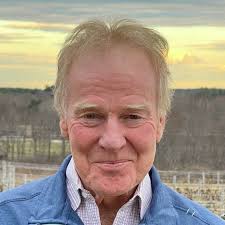
Peter Senge
The Learning Organization and Personal Mastery as Adult Development
Peter M. Senge (1947–Present) is an American systems scientist and senior lecturer at the MIT Sloan School of Management, widely acclaimed for his foundational work on “the learning organization.” His seminal book, The Fifth Discipline: The Art & Practice of The Learning Organization, introduced a holistic framework for fostering continuous learning and adaptation within organizations. Senge’s contributions are deeply relevant to adult development as he argues that genuine organizational learning cannot occur without significant personal growth and transformation among its members. He champions a systems thinking approach, emphasizing that individuals must develop new ways of perceiving, thinking, and interacting to enable both their own and their organization’s sustained development.
Key Concepts and Contributions:
The Learning Organization: Senge defines a learning organization as a place “where people continually expand their capacity to create the results they truly desire, where new and expansive patterns of thinking are nurtured, where collective aspiration is set free, and where people are continually learning how to learn together.” This is not merely about training or information transfer, but about fostering a deep, generative capacity for continuous improvement and innovation.
The Five Disciplines of the Learning Organization: Senge identified five core disciplines that, when integrated, enable a learning organization. Each discipline has profound implications for individual adult development:
-
Personal Mastery: This discipline focuses on the individual’s commitment to continuous learning and personal growth. It involves clarifying one’s personal vision, focusing energies, developing patience, and seeing reality objectively. For Senge, personal mastery is fundamental: organizations can only learn if their members are committed to lifelong personal development.
-
Mental Models: These are deeply ingrained assumptions, generalizations, or even pictures or images that influence how we understand the world and how we take action. The discipline of mental models involves bringing these assumptions to the surface, scrutinizing them, and being open to changing them. This process is crucial for adult learning, as it challenges individuals to transcend their limiting beliefs and preconceived notions.
-
Shared Vision: This discipline involves fostering a genuine commitment to a common purpose, values, and desired future. It’s about building a shared picture of the future that motivates individuals and organizations to strive for collective aspiration rather than just compliance. Developing a shared vision requires adults to engage in dialogue, empathy, and collaborative meaning-making.
-
Team Learning: This discipline focuses on the collective intelligence and capacity of teams. It involves mastering the practices of dialogue (free and creative exploration of complex issues) and discussion (presenting and defending different views) to create a deeper understanding and align collective action. Team learning cultivates the ability for adults to think together and transcend individual perspectives for collective growth.
-
Systems Thinking: This is the “fifth discipline” that integrates the others. It involves seeing the whole rather than just isolated parts, understanding the interconnectedness of phenomena, and recognizing patterns of change. Systems thinking helps individuals and organizations move beyond simplistic cause-and-effect explanations to understand complex dynamics, feedback loops, and leverage points for change. This discipline is essential for adults to develop a more sophisticated and holistic understanding of their environment and their role within it.
Significance for Adult Development:
Senge’s work holds immense significance for adult development for several reasons:
-
Elevating Personal Mastery: He places individual adult development—specifically the commitment to personal mastery and ongoing learning—at the very core of organizational success. This highlights that growth in organizations is not just about skills training, but about profound internal shifts in individuals.
-
Challenging Adult Assumptions: The discipline of Mental Models directly addresses a key aspect of adult development: the capacity to critically examine and revise deeply held beliefs and assumptions that often operate unconsciously. This continuous process of self-reflection and re-evaluation is central to mature adult learning.
-
Fostering Holistic Growth: By integrating five disciplines, Senge’s framework encourages a holistic view of adult growth in the workplace, encompassing cognitive (systems thinking, mental models), emotional (personal mastery, team learning), and social (shared vision, team learning) dimensions.
-
Cultivating Collaborative Intelligence: His emphasis on Team Learning underscores the developmental significance of adults learning to collaborate, engage in meaningful dialogue, and collectively solve complex problems, moving beyond individualistic approaches to knowledge and action.
-
Promoting Lifelong Learning: Senge’s entire framework champions a culture of continuous inquiry and learning, suggesting that the most successful individuals and organizations are those committed to ongoing adaptation, experimentation, and personal and collective growth throughout the adult lifespan.
In summary, Peter Senge’s concept of the learning organization, built upon his five disciplines, provides a powerful and practical framework for understanding and fostering adult development within organizational contexts. He argues that genuine organizational growth stems from individuals’ commitment to personal mastery, their capacity to challenge mental models, engage in team learning, build a shared vision, and apply systems thinking, thereby making adult learning and personal transformation central to both individual and collective success.